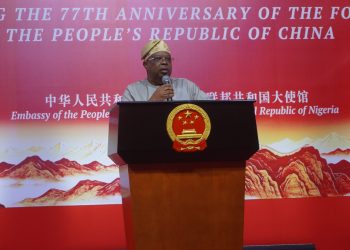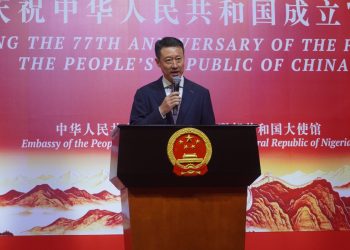










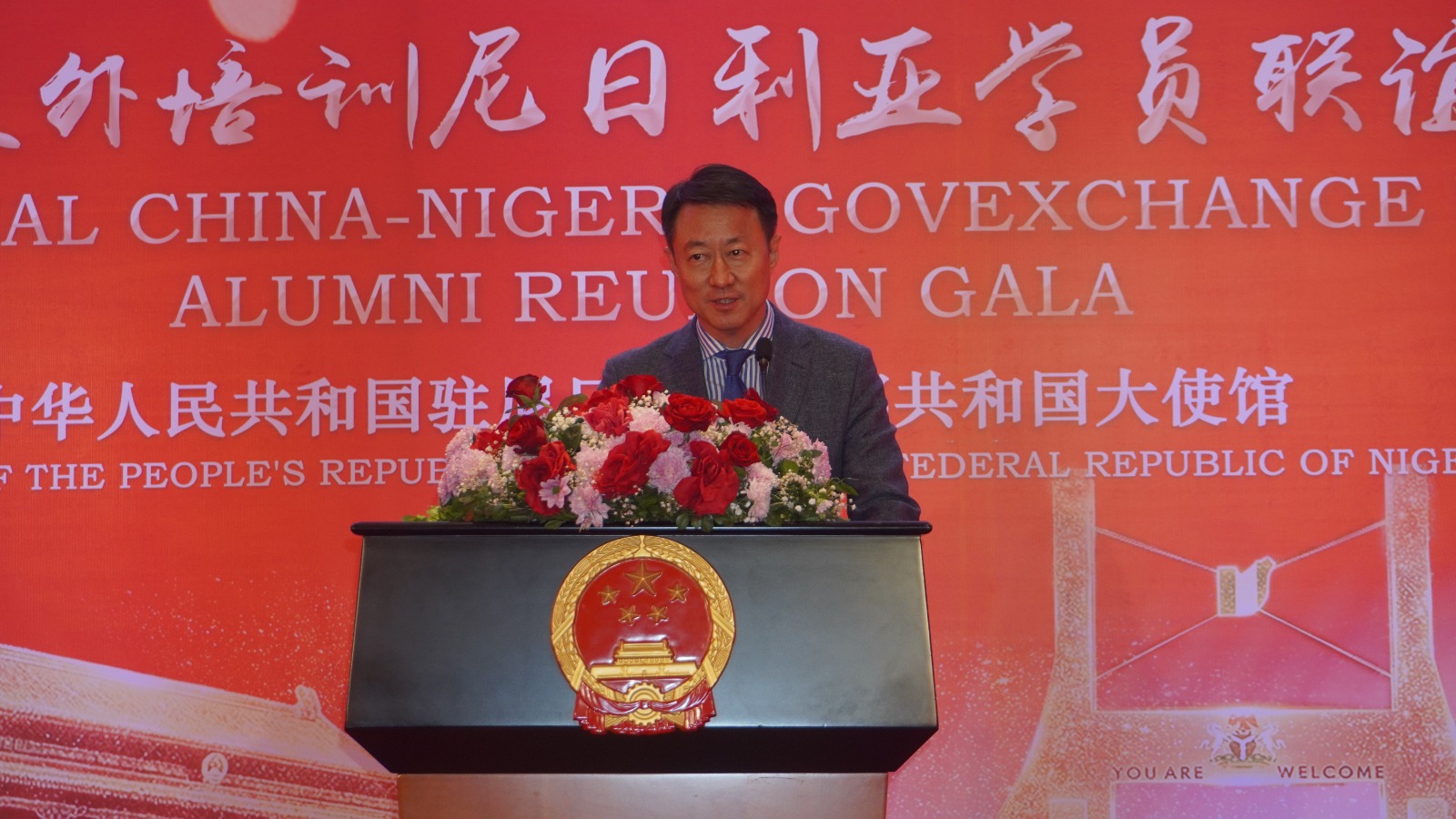
Chinese Ambassador to Nigeria, Yu Dunhai, says more than 10,000 Nigerians have benefited from various Chinese government-sponsored training and exchange programmes over the years, describing the initiative as a key pillar of China–Nigeria relations.
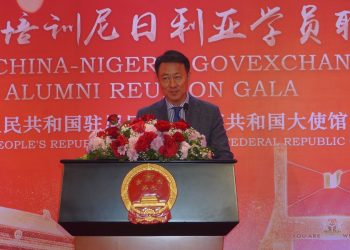
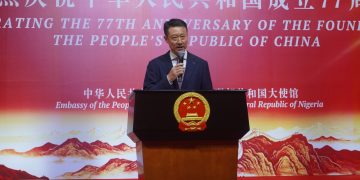
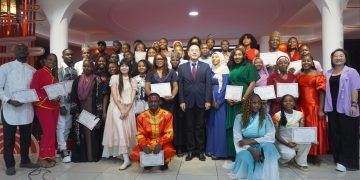
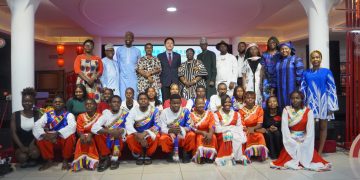
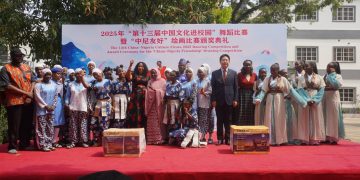
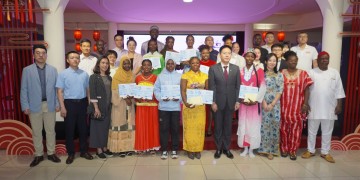
He made the disclosure on Thursday, at the first annual China–Nigeria Government Exchange Programme Alumni Reunion Gala, held at the Continental Hotel in Abuja.
The event was organised by the Chinese Embassy in Nigeria and brought together alumni of the exchange programme, senior government officials and embassy officials and development stakeholders from across the country.
Ambassador Yu said the reunion gala was designed to provide a platform for alumni of the Chinese government exchange programme to reconnect, exchange ideas and contribute meaningfully to the strengthening of China–Nigeria relations.
According to him, the training opportunities offered to Nigerians span a wide range of areas, including governance, poverty reduction, manufacturing, agriculture, public health, trade, investment, science and technology, innovation, as well as the blue and digital economies.
“These programmes not only enhance individual capacity but also contribute significantly to Nigeria’s economic and social development,” he said, noting that alumni of the programme are spread across Abuja, Lagos, Maiduguri, Ibadan, Benin City and other parts of the country.
Yu explained that China’s commitment to training Nigerians is rooted in the long-standing bilateral relationship between both countries, which has spanned over half a century.
He described China and Nigeria as “natural partners” that have consistently supported each other on core national interests and major international concerns.
The ambassador cited China’s recent opposition to external threats against Nigeria’s sovereignty and its support for Nigeria’s growing role in global affairs, including its emergence as a BRICS partner country, return to the International Maritime Organisation and aspiration for G20 membership.
Yu, in turn, acknowledged Nigeria’s support for China, particularly its strict adherence to the One-China principle, opposition to Taiwan independence and backing of China’s efforts toward national reunification.
Yu revealed that China–Nigeria economic ties have reached new heights, with bilateral trade volume surpassing $22 billion this year alone, exceeding the total figure for 2024. He added that Chinese direct investment in Nigeria has grown by 130 percent, while Nigeria’s exports to China have increased by over 200 percent. He disclosed that both countries are working closely to implement China’s zero-tariff policy announced in June, under which 100 percent of Nigerian products will enjoy duty-free access to the Chinese market.
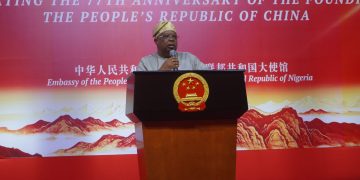
Speaking on behalf of the exchange program scholars, Olubunmi Olowookere, Permanent Secretary, FCT Social Development Secretariat expressed gratitude to the Chinese government and people for the warmth, hospitality and professionalism extended to Nigerian participants during the training programmes.
She noted that the programme exposed Nigerian participants to practical, people-centred development models that would strengthen social welfare, poverty alleviation and community development efforts in Nigeria.
Also speaking, Director General of the Centre for Management Development (CMD), Bitrus Chinoko, described the China–Nigeria Government Exchange Programme as a strong model of international collaboration and capacity building.
He revealed that 69 CMD staff participated in 28 China-sponsored capacity development programmes in 2025, describing the initiative as a valuable investment in human capital.