

















By Professor Udenta O. Udenta
The contemporary international order stands at a consequential historical juncture. Humanity is confronted by a concatenation of crises that refuse to respect national boundaries: geopolitical tensions, climate change, technological disruptions, widening inequalities, public health emergencies, conflicts, and the persistent marginalisation of developing nations within global decision-making structures. These converging crises have laid bare the structural limitations of existing governance arrangements and sharpened the demand for a more inclusive, equitable and genuinely representative international system.
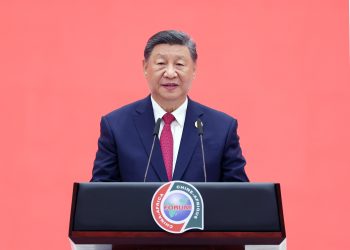
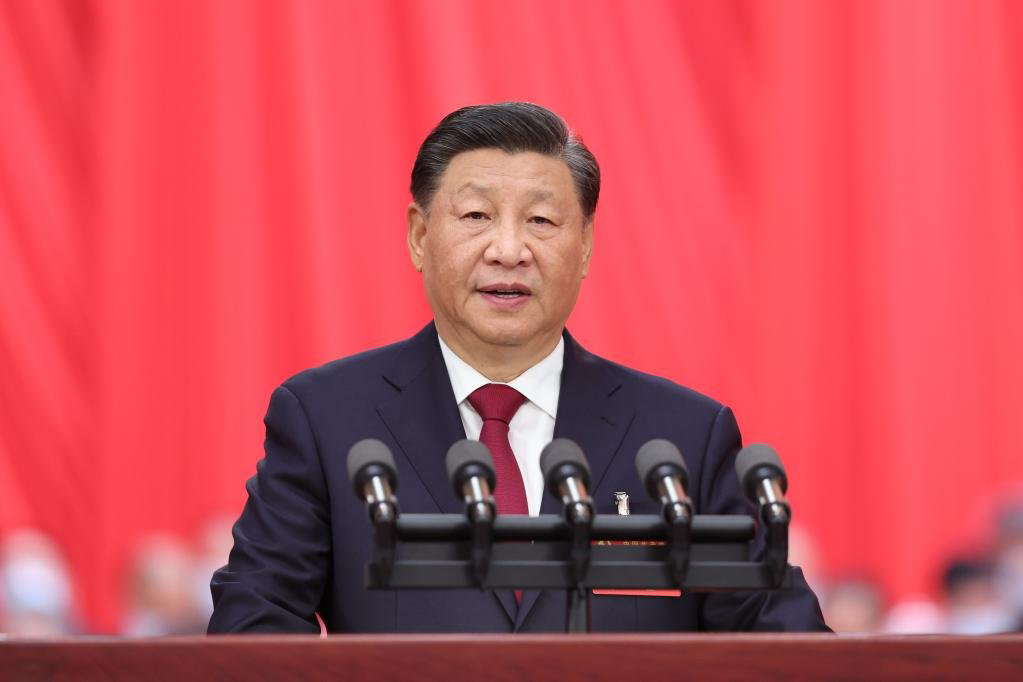
It is within this complex historical moment that the Global Governance Initiative (GGI) emerged as a significant contribution to the global conversation on the future of international cooperation. Proposed by Chinese President Xi Jinping on September 1, 2025, at the Shanghai Cooperation Organization (SCO) Plus Meeting, the initiative represented a philosophical and practical intervention into the question of how humanity should organise collective responses to shared challenges.
A Moment of Global Reassessment
In the space of one year, the GGI has travelled a considerable distance from intellectual proposition towards an emerging framework for action. Supported by nearly 160 countries and international organisations, with more than 60 countries participating in the Group of Friends of Global Governance, the initiative has demonstrated considerable international resonance.
The significance of the GGI lies less in the accumulation of principles than in its attempt to translate normative claims into institutional mechanisms and practical cooperation. The establishment of the International Organization for Mediation and the launch of the World Artificial Intelligence Cooperation Organization illustrate the movement from conceptual imagination to concrete global governance architecture.
From Principles to Practice: The First Year of the GGI
Every durable political and institutional project begins as an idea before assuming organisational form. The history of international relations suggests that principles acquire historical consequence only when they are translated into institutions and practices capable of surviving political vicissitudes.
The GGI was built around five fundamental concepts: adherence to sovereign equality, compliance with international law, promotion of multilateralism, adoption of a people-centred approach, and emphasis on taking concrete actions to address global challenges.
Taken together, these principles constitute a pointed interrogation of a global governance order that many developing countries regard as insufficiently representative. For decades, the structures of international decision-making have often reflected the realities of the post-Second World War era rather than the contemporary distribution of global economic, demographic and political power.
The first year of the GGI demonstrates an important transition from normative advocacy to institutional experimentation. The creation of new platforms for mediation and artificial intelligence cooperation indicates an effort to address emerging areas where existing governance arrangements remain inadequate.
The proposed Xiong’an Global Governance Forum further represents an attempt to create a sustained intellectual and policy platform where governments, scholars, institutions and civil society actors can exchange ideas and develop practical solutions. The larger significance of these developments is that global governance cannot subsist indefinitely on the thin gruel of declarations and diplomatic communiqués. It requires institutions, partnerships, technological cooperation and mechanisms capable of delivering tangible benefits.
The Chinese Approach: Reforming Global Governance Through Inclusiveness and Cooperation
The Chinese contribution to the debate on global governance reform, as articulated through the GGI, proceeds from a compelling proposition: an international system claiming universal legitimacy must become more equitable in representation, more inclusive in participation and more attentive to collective responsibility.
China’s approach does not advocate replacing existing international institutions but improving them through broader participation and stronger representation of developing countries. The June 17, 2026 white paper, Building a More Just and Equitable Global Governance System: China’s Principles, Proposals and Actions, provides a detailed articulation of this perspective.
At the heart of the Chinese conception lies the recognition that the major contradictions of the contemporary world have acquired a distinctly transnational character. No country, regardless of economic strength or military capability, can independently resolve issues such as climate change, pandemics, cyber insecurity, artificial intelligence governance or economic inequality.
The GGI consequently advances an idiom of governance founded upon dialogue rather than confrontation, partnership rather than domination, and mutual benefit rather than a crude zero-sum conception of international relations. This approach is particularly relevant in an era where many developing nations seek greater agency in shaping global rules. Global governance is, at bottom, also a question of power: who possesses the authority to define norms, whose interests are institutionalised, whose historical experiences count, and whose voices are permitted to shape the common future.
Significance for the Global South and Africa
For the countries of the Global South, the GGI arrives at a time when there is increasing recognition that global institutions must become more democratic and inclusive. The historical experience of developing countries is instructive: decisions taken in international forums have frequently carried profound consequences for nations whose capacity to influence those decisions has been comparatively modest. Issues ranging from trade rules and financial governance to technology access and climate financing have often revealed structural inequalities within the international system.
The GGI’s emphasis on sovereign equality, development cooperation and inclusive participation aligns with long-standing aspirations across Africa and the wider Global South. Africa particularly, with its youthful population, vast natural resources and growing economic potential, requires a global environment that supports industrialisation, technology transfer, infrastructure development and sustainable growth.
For African states, therefore, the practical value of initiatives such as the GGI will ultimately be tested by outcomes: improved access to technology, stronger development partnerships, enhanced capacity building, greater participation in global institutions and solutions to challenges affecting ordinary citizens.
Nigeria and the Opportunity for Strategic Engagement
Nigeria, as Africa’s largest economy and one of the continent’s consequential diplomatic actors, has a substantial stake in the evolving architecture of global governance. The country faces complex development challenges requiring international cooperation: infrastructure deficits, energy transition demands, digital transformation, food security concerns, unemployment and the need for industrial expansion.
A more inclusive global governance framework could provide opportunities for Nigeria to strengthen partnerships in technology, trade, education, climate adaptation and economic development.
Yet Nigeria’s engagement with initiatives such as the GGI cannot be reduced to diplomatic participation. It requires strategic national planning, institutional capacity and the ability to convert international partnerships into measurable domestic outcomes.
The future of global governance will not only be shaped by major powers. Middle powers and influential developing countries such as Nigeria must actively participate in defining the rules, institutions and priorities of the emerging international order.
Challenges Facing the Implementation of the GGI
Notwithstanding its promising trajectory, the implementation of the GGI confronts formidable challenges.
The first is geopolitical competition. The current international environment is characterised by strategic rivalry among major powers, making consensus-building increasingly difficult. Global governance initiatives must navigate competing interests while maintaining broad international legitimacy.
The second is the perennial challenge of translating principles into measurable outcomes. International initiatives often succeed or fail based on their ability to improve the lives of ordinary people. The GGI must therefore demonstrate practical benefits beyond diplomatic commitments.
The third concerns institutional coordination. Global governance involves numerous existing organisations, from the United Nations system to regional bodies. Effective cooperation will require complementarity rather than duplication.
The fourth is trust. Developing countries will evaluate global initiatives based on transparency, fairness and whether promised partnerships translate into genuine development opportunities.
The Road Ahead: From Commitment to Collective Action
The future of the GGI will depend upon sustained and intelligent cooperation among China, developing countries, international organisations and regional institutions.
The international community should view global governance reform not as a competition among nations but as a collective necessity. The challenges facing humanity are too complex for unilateral solutions.
China, as the initiator of the GGI, has the responsibility to continue demonstrating openness, transparency and practical cooperation. African countries, including Nigeria, must articulate their priorities clearly and engage strategically to ensure that global initiatives align with their development objectives.
The Global South must also strengthen its collective voice. Greater coordination among developing nations will be essential in shaping a fairer international system.
Ultimately, the measure of the GGI will not be the number of declarations it generates, but the institutions it builds, the partnerships it deepens, the inequalities it helps to mitigate, and the lives it improves.
Toward a Shared Future
The first anniversary of the Global Governance Initiative should be understood as more than the commemoration of a diplomatic proposal. It marks the emergence of a broader conversation about the future architecture of international relations.
The world requires a governance system capable of addressing twenty-first-century challenges with twenty-first-century solutions. Such a system must be inclusive, representative and responsive to the aspirations of all peoples.
The GGI represents one contribution to that global search for a more balanced order. Its evolution from principles to practices demonstrates the possibility of transforming ideas into institutions and aspirations into action.
For Africa, Nigeria and the wider Global South, the initiative presents an opportunity to participate more actively in shaping the global future.
The central question before humanity is no longer whether global governance must change. The realities of our interconnected world have already answered that question. The challenge is whether nations can work together to build a system that reflects shared responsibility, mutual respect and the common destiny of humankind.
The enduring promise of the Global Governance Initiative lies precisely in its response to that challenge: the conviction that a more just and equitable world order is not only desirable but achievable through cooperation, dialogue and collective action.
Udenta O. Udenta, is a Professor of Critical Theory and Cultural Studies & a Distinguished Fellow of Abuja School of Social and Political Thought.