












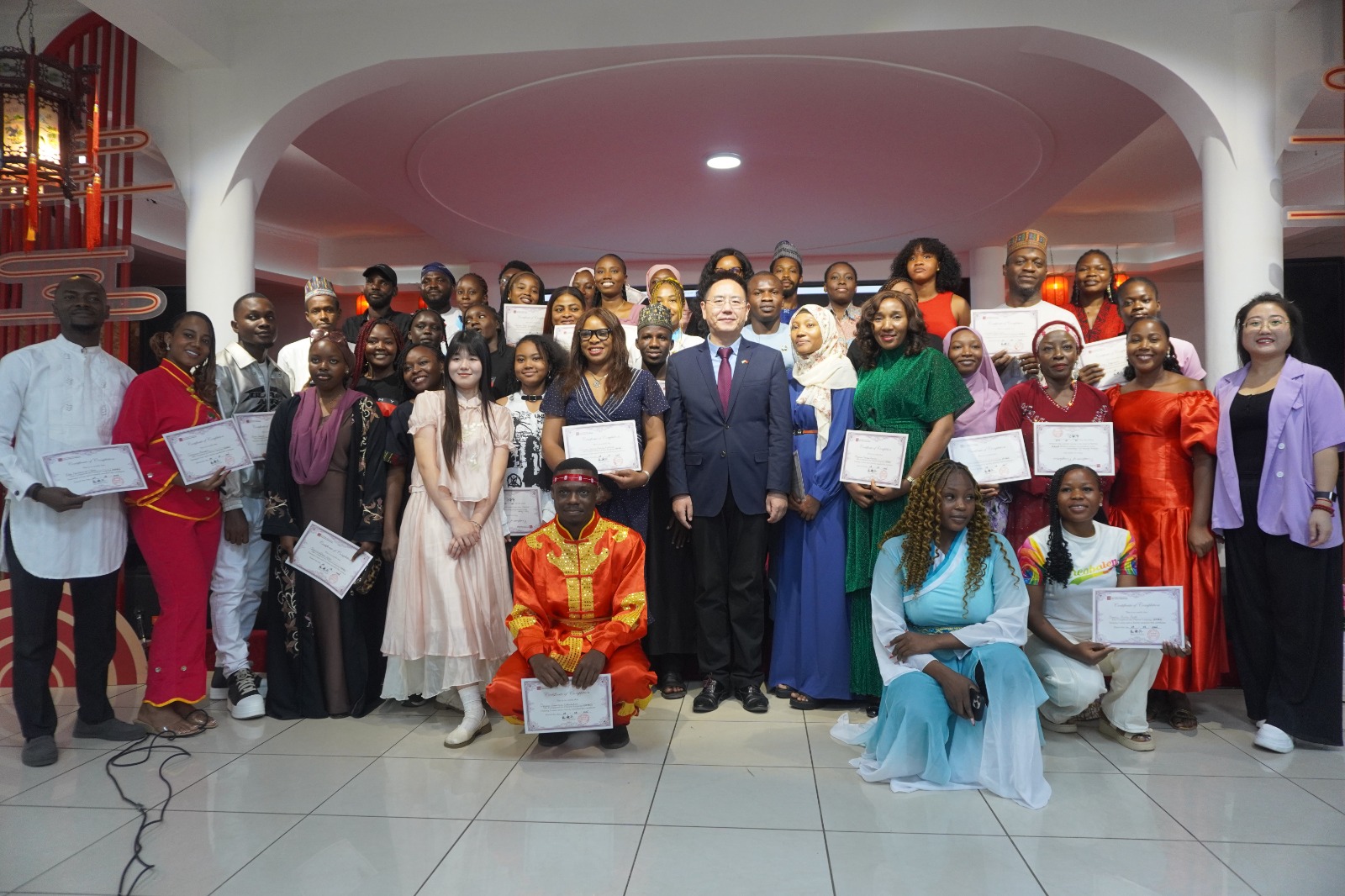
The China Cultural Centre has graduated over 40 Nigerian students from its 2026 Chinese Language Programme Phase 1, with officials, tutors and participants highlighting the growing importance of language learning in deepening ties between China and Nigeria.
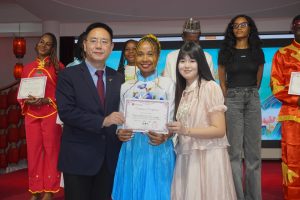
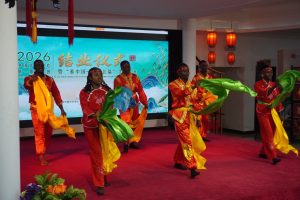
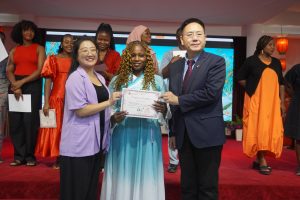
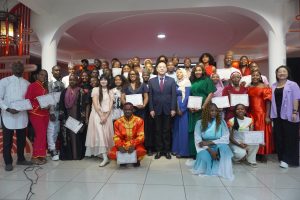
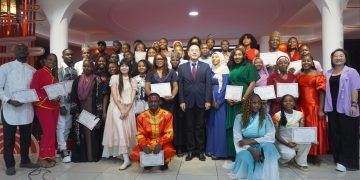
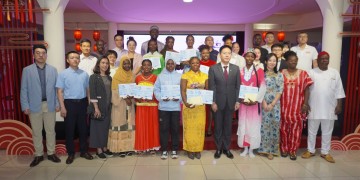
The graduation ceremony, held in Abuja on Friday, featured cultural performances and the presentation of certificates to students across the HSK 1, HSK 2 and HSK 3 levels.
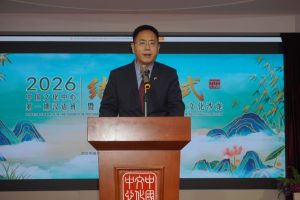
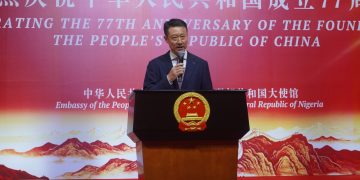
Speaking at the event, Cultural Counsellor and Director of the Centre, Yang Jianxing, congratulated the graduates and praised their dedication, describing the Chinese language as a vital carrier of over 5,000 years of civilisation.
“Chinese is one of the most widely spoken languages in the world and a common cultural treasure of all humankind,” he said, noting that it is also one of the six official languages of the United Nations, with more than 200 million learners across over 190 countries and regions.
Yang emphasized that learning Chinese provides a gateway to understanding China’s development and accessing opportunities in bilateral cooperation. He referenced China’s newly adopted 15th Five-Year Plan (2026–2030), which focuses on high-quality development and expanded global partnerships, including with Nigeria.
He added that the event coincides with the 55th anniversary of diplomatic relations between both countries and the China-Africa Year of People-to-People Exchanges, expressing hope for deeper cultural and educational collaboration.
Providing insight into the academic programme, Chinese language tutor Qiu Nan said a total of 42 students graduated, including 23 in HSK 1, 11 in HSK 2 and five in HSK 3.
She explained that the HSK (Hanyu Shuiping Kaoshi) is an internationally recognised proficiency test ranging from beginner to advanced levels, enabling learners to develop communication skills and access academic and career opportunities.
“At higher levels, students can communicate fluently, almost like native speakers,” she said.
Qiu, who has taught in several countries over the past five years, commended Nigerian students for their commitment.
“I see the students work very hard, even during the night. Compared to others, Nigerian students are among the most hardworking,” she noted.
She encouraged more Nigerians to enrol in Chinese language programmes at the China Cultural Centre and other institutions, including Confucius Institutes in Lagos and Anambra, stressing that language remains a key bridge for international cooperation.
One of the graduates, Igwe Israel Okezie, described learning Chinese as a transformative opportunity.
“My first degree was in English language, and I have a passion for languages. I chose Chinese because I believe it is a doorway to making it in life, both academically and financially,” he said.
Okezie dismissed claims that the language is difficult, attributing success to dedication and discipline. He also highlighted China’s growing influence in technology, education and global development as a key motivation.
“Anyone who ignores Chinese today is missing a lot. It opens you up to the international community,” he added.
He urged Nigerian youths to embrace new opportunities and adopt positive mindsets, noting that acquiring skills such as foreign languages can enhance personal and professional growth.
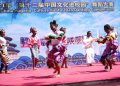
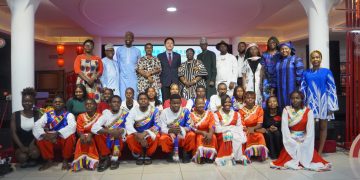
The ceremony also featured a cultural session showcasing Northeast China, celebrated for its rich heritage, cuisines, agricultural strength and historical role in industrial development.
See more photos below: