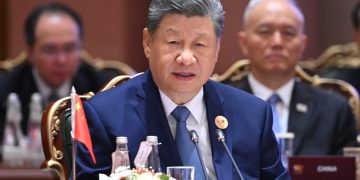










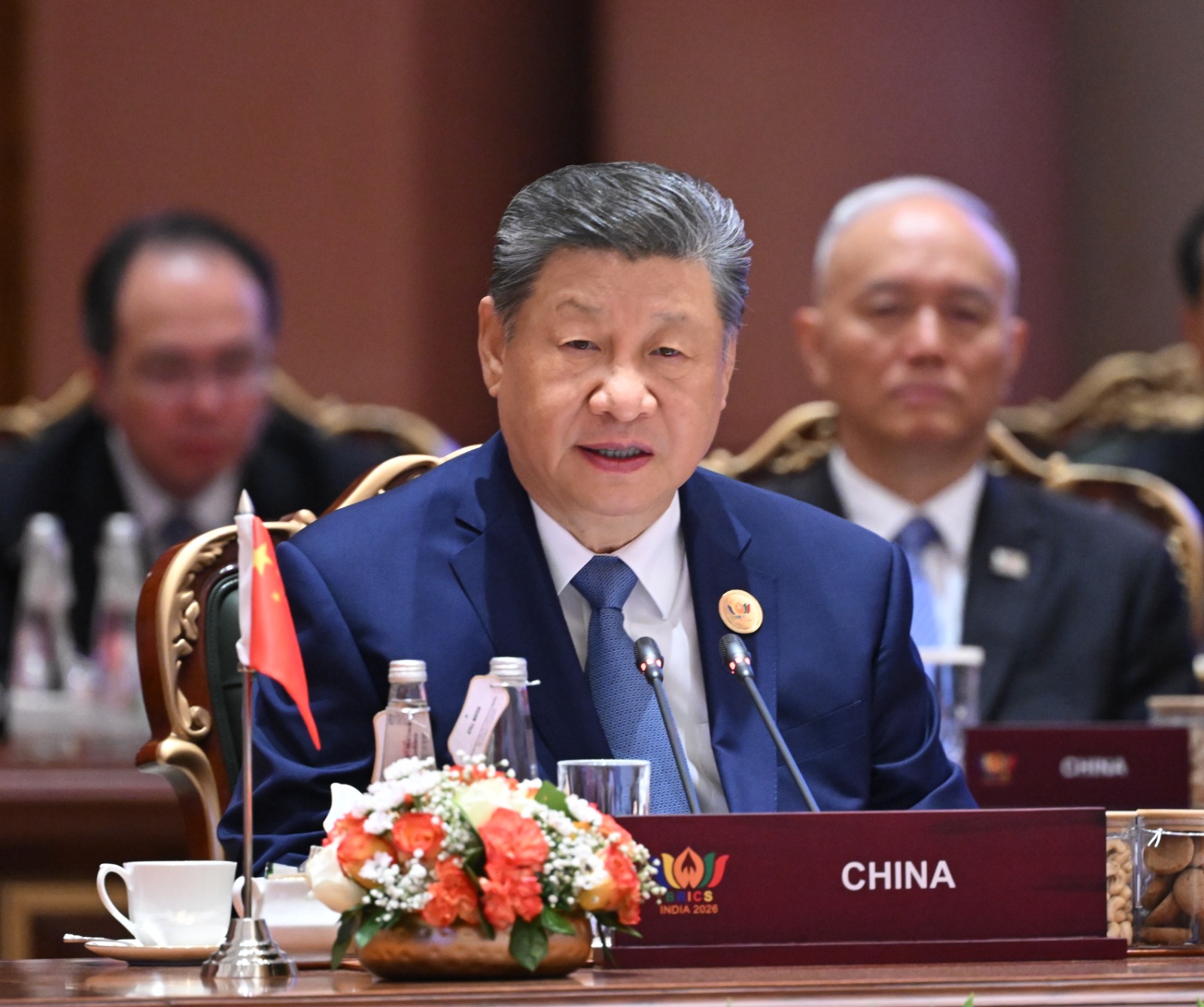
Chinese President Xi Jinping has described the BRICS cooperation mechanism as the world’s most influential platform for cooperation among emerging markets and developing countries.
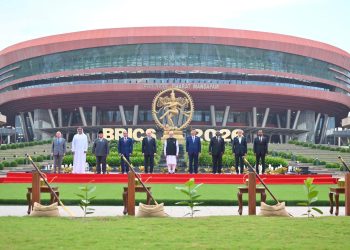
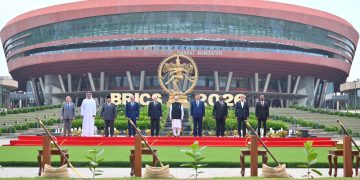
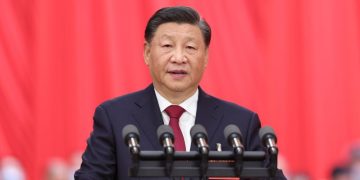
Xi stated this on Saturday while addressing Session I of the 18th BRICS Summit in New Delhi, India, as the grouping marked 20 years of cooperation.
The Chinese president said BRICS had demonstrated “remarkable vitality and dynamism” over the past two decades, expanding its membership and establishing a comprehensive, multi-tiered framework for cooperation.
According to him, the 20-year journey has been characterised by self-reliance, solidarity and mutual support among emerging markets and developing countries.
Xi noted that BRICS countries had worked together to address major global challenges, including the global financial crisis, COVID-19 pandemic and climate change, while defending the common interests of the Global South.
“BRICS countries have worked together to tackle challenges ranging from the global financial crisis, the COVID-19 pandemic to climate change,” he said.
He added that the group had provided stability and positive momentum to the international community while advancing cooperation across economic, political, cultural and other fields.
Xi said the world was undergoing changes “unseen in a century,” with the Global South rapidly gaining strength and the trend towards a multipolar world becoming increasingly evident.
However, he warned that unilateralism and power politics were also rising, putting multilateralism and the international order under pressure.
Against this backdrop, Xi urged BRICS countries to “firmly stand on the right side of history” and work towards a more just and equitable international order and a community with a shared future for humanity.
He identified four areas where BRICS should serve as a pioneer: innovation-driven development, peace and stability, mutual learning between civilisations, and reform of global governance.
On innovation, Xi called for stronger BRICS cooperation in artificial intelligence, including open-source development and greater sharing of technology and expertise.
He said China had proposed an initiative to promote new industrialisation through artificial intelligence among BRICS countries and was prepared to work with other members to advance research, development and application.
China, he added, was also willing to deepen cooperation in industrial and supply chains and encouraged BRICS countries to participate actively in the World Artificial Intelligence Cooperation Organization.
On global peace and security, Xi urged BRICS members to oppose Cold War mentality and bloc confrontation, respect the sovereignty of countries and refrain from interference in their internal affairs.
He also called on the group to play a constructive role in addressing international flashpoints.
Speaking on the situation in the Middle East, Xi said the ongoing conflict had caused serious losses to people across the region and was contrary to the common interests of the international community.
He called on relevant parties to pursue political solutions and work towards a permanent and comprehensive ceasefire.
“China will work with fellow BRICS members to play a due role in bringing peace and tranquility to the Middle East,” Xi said.
The Chinese president also called for deeper cooperation in culture, tourism and education, as well as increased youth and people-to-people exchanges.
He urged BRICS countries to promote mutual learning among civilisations, respect diversity and strengthen dialogue and communication among peoples.
On global governance, Xi called for reforms that would make the international system more democratic, just and equitable.
He reaffirmed the need to uphold the authority of the United Nations and support a multilateral trading system centred on the World Trade Organization.
Xi also urged BRICS members to reject protectionism and take a leading role in shaping global governance in emerging areas such as cyberspace, outer space and the deep sea.
He stressed that solidarity and cooperation remained the driving force behind the BRICS initiative and urged members to respect one another’s core interests, seek common ground while respecting differences, and properly manage disagreements through dialogue.
Xi announced that China would assume the rotating BRICS chairmanship and host the 19th BRICS Summit in 2027.
He said China was ready to work with all BRICS members to build consensus and open what he described as the grouping’s third “golden decade” of cooperation, prosperity and progress.
At the summit, leaders praised BRICS’ achievements over the past 20 years, describing the mechanism as broadly representative and possessing significant development potential.
They called on BRICS countries to strengthen their voice in the Global South, uphold multilateralism and the central role of the United Nations, respect sovereign equality and international law, support free trade and jointly address global challenges.
The leaders also expressed support for China’s role as next year’s BRICS chair and its hosting of the 19th BRICS Summit.
The summit concluded with the adoption of a joint declaration by participating leaders.