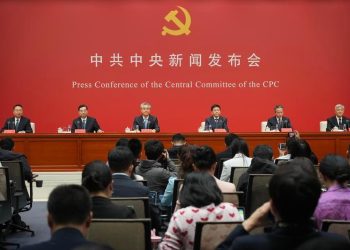









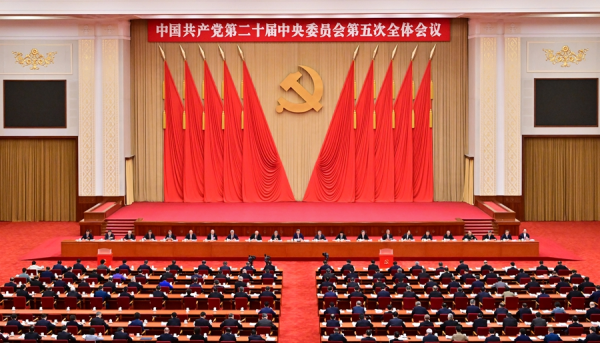
The Communist Party of China (CPC) has adopted a major resolution on strengthening party discipline and self-governance at the fifth plenary session of its 20th Central Committee, held in Beijing from October 26 to 29, 2026.
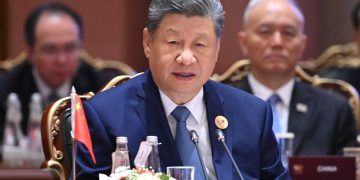
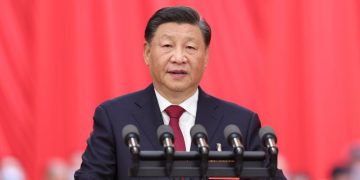
The four-day meeting, presided over by the Political Bureau of the CPC Central Committee, was attended by 162 members and 117 alternate members of the Central Committee. Chinese President and CPC General Secretary Xi Jinping delivered an important address and presented a report on the work of the Political Bureau.
The plenary adopted the Resolution of the Central Committee of the Communist Party of China on Certain Major Issues concerning Persevering with Full and Rigorous Party Self-Governance, following deliberations on the draft resolution, which Xi explained to participants.
The meeting reviewed and endorsed the work of the Political Bureau since the fourth plenary session, noting progress in economic development, reform, national security, social welfare, ecological conservation, national defence and diplomacy.
It also declared that China had successfully concluded its 14th Five-Year Plan period, while the 15th Five-Year Plan had made a positive start, with new progress recorded in the development of the Party and the country.
A major focus of the plenary was the CPC’s commitment to strengthening internal discipline, combating corruption and improving the system of party supervision.
According to the resolution, the Party would intensify efforts to strengthen the political commitment and integrity of its members, improve the selection and supervision of officials, reinforce grassroots party organisations and ensure stricter enforcement of party regulations.
The meeting also emphasised the need to improve conduct, tighten discipline and pursue a comprehensive approach to fighting corruption, addressing both its immediate manifestations and underlying causes.
It called for measures to ensure that officials do not have the audacity, opportunity or desire to engage in corruption, while strengthening oversight of the exercise of power.
The plenary described full and rigorous party self-governance as essential to consolidating the CPC’s long-term governing position and advancing the rejuvenation of the Chinese nation.
It also highlighted the importance of democratic centralism, stronger party institutions, improved accountability and closer coordination among oversight mechanisms.
On the country’s economic and social development, the meeting called for sustained efforts to achieve this year’s major economic and social development targets and secure a strong start to the 15th Five-Year Plan.
It urged the authorities to deepen reform and opening up, stimulate domestic demand, promote innovation-driven and high-quality growth, improve public services and strengthen workplace safety, disaster prevention, food and drug safety, and social stability.
The Central Committee further called for effective implementation of the resolution, describing the study and application of the plenary’s guiding principles as a major political task for the entire Party.
In a significant political decision, the plenary announced that the CPC’s 21st National Congress would be convened in Beijing in the second half of 2027.
The meeting described the forthcoming congress as an important event for the Party and the country, coming at a critical stage in China’s drive to basically realise socialist modernisation and advance the Second Centenary Goal.
The plenary also elected Zhang Shengmin as a member of the Political Bureau of the CPC Central Committee and filled vacant seats on the Central Committee with ten alternate members.
In addition, it deliberated and adopted reports concerning serious violations of discipline and the law involving several officials, confirming previous decisions to expel a number of them from the Party and remove one official from his Party position.
The session concluded with a call for all Party members to rally around the CPC Central Committee, uphold Xi Jinping Thought on Socialism with Chinese Characteristics for a New Era, strengthen party self-governance and unite the Chinese people in advancing national rejuvenation through Chinese modernisation.