









By Raymond Na’anlep Delmut
From resource sovereignty to industrial transformation, a new framework for China–Africa mining cooperation offers Nigeria an opportunity to move beyond extraction and build an economy in which mineral wealth generates national prosperity.
Africa stands at a defining moment in the global struggle for economic competitiveness, energy security, and technological leadership. Beneath its soil lie mineral resources essential to the industries of tomorrow, from electric vehicles and renewable energy systems to advanced electronics, telecommunications, aerospace engineering, and artificial intelligence infrastructure. Yet the continent faces a familiar paradox, extraordinary natural wealth coexisting with persistent industrial underdevelopment, inadequate infrastructure, unemployment, and limited participation in global manufacturing value chains.
For generations, Africa has supplied raw materials to industrial economies while importing finished products manufactured from those same resources. The continent has frequently borne the environmental and social costs of extraction without capturing a proportionate share of the industrial, technological, and financial benefits. The emerging global competition for critical minerals has brought this contradiction into sharper focus. As major economies accelerate their transitions towards clean energy, digital infrastructure, and advanced manufacturing, demand for minerals such as lithium, cobalt, copper, nickel, graphite, and rare earth elements has acquired strategic significance. Africa is increasingly central to this transformation, but the fundamental question remains unresolved, will the continent once again serve primarily as a supplier of raw materials, or will it become an industrial participant in the technologies that define the twenty-first century?
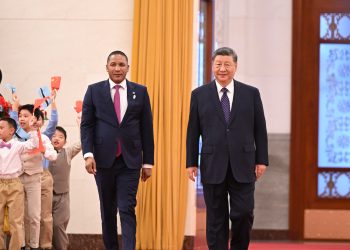
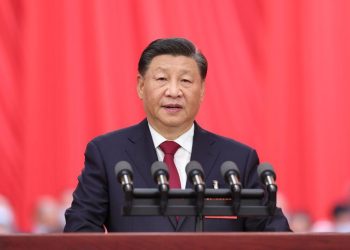
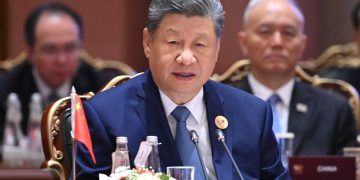
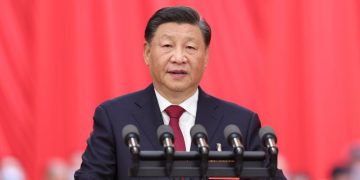
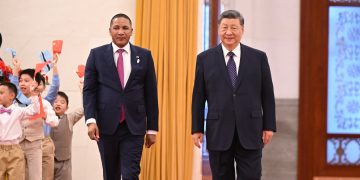
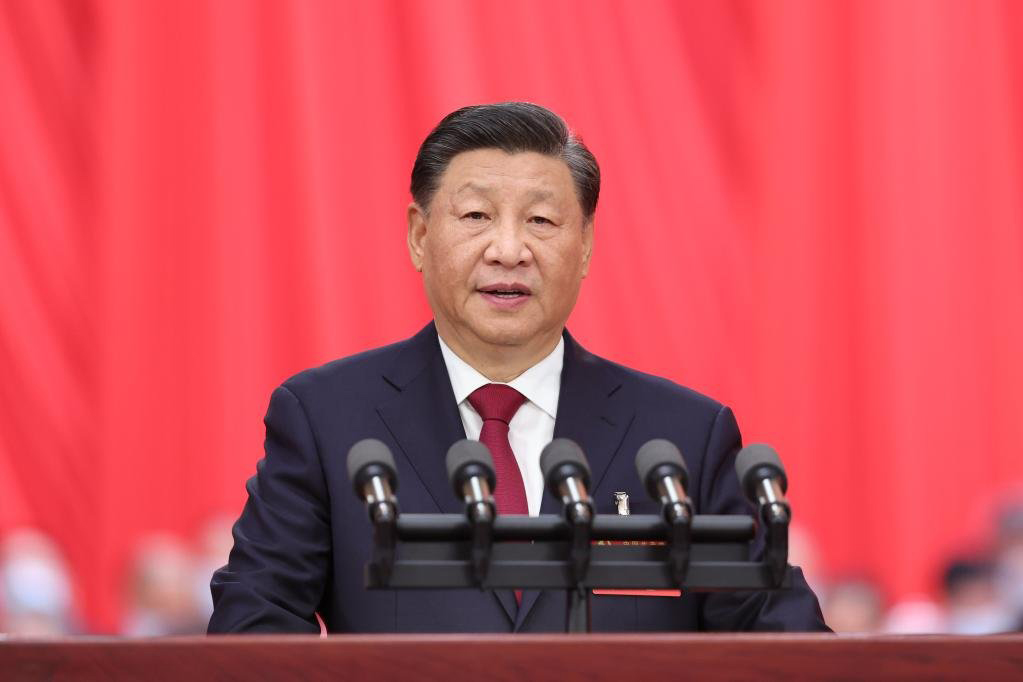
It is against this background that Chinese President Xi Jinping’s four-point proposition on China–Africa mining cooperation, presented during his October 13, 2026, meeting with Botswana’s President Duma Gideon Boko, deserves serious attention. The proposition establishes four guiding principles: African ownership of African resources, mutual benefit and balanced interests, high-quality development through industrial upgrading, and a fair and open international cooperation environment. These principles offer a potentially important framework for redefining China–Africa mineral partnerships. Their significance, however, will ultimately depend not on diplomatic declarations but on whether they produce measurable changes in investment practices, industrial capabilities, environmental protection, technology transfer, and the distribution of economic benefits.
For Nigeria, the implications are particularly profound. As a Nigerian diplomat, policy analyst, and Dongfang Scholar, my engagement with China’s development experience has reinforced an important conviction that, natural resources do not automatically produce national development. Prosperity depends on the quality of institutions, the effectiveness of public policy, the development of human capital, and the capacity of governments to transform economic opportunities into lasting productive capabilities. China’s own modernization illustrates the importance of industrial policy, infrastructure, technological learning, and long-term strategic coordination. Nigeria must draw lessons from that experience without overlooking the differences between the two countries or surrendering responsibility for its own development choices.
The central opportunity presented by the four-point proposition is therefore not simply to expand Chinese investment in African mining. It is to establish a new development compact in which African mineral wealth becomes the foundation of industrial transformation rather than another chapter in the history of commodity dependence.
The first principle, that African resources belong to Africa, appears straightforward. Yet its implications extend far beyond legal ownership. Resource sovereignty is meaningful only when countries possess the institutional capacity to determine how their minerals are explored, extracted, processed, marketed, and converted into public benefits. For Nigeria, this distinction is crucial. The country possesses a diverse mineral endowment, including limestone, gold, iron ore, coal, bitumen, lead, zinc, barite, and deposits of minerals associated with emerging industrial technologies. These resources offer opportunities for economic diversification, manufacturing development, employment creation, and increased non-oil export earnings.
However, Nigeria’s solid minerals sector has historically contributed only a small share of national economic output relative to its perceived geological potential. The challenge is not merely inadequate extraction. It is the combination of insufficient geological information, limited infrastructure, fragmented value chains, financing constraints, illegal mining, weak regulatory enforcement, and inadequate local processing capacity. Mineral wealth cannot become national wealth where the state lacks reliable knowledge of its resource base or the institutional strength to regulate its exploitation.
China’s expressed willingness to support African countries in developing mining strategies suited to their national conditions is therefore potentially significant. Nigeria could benefit from cooperation in geological mapping, mineral resource assessment, laboratory development, geospatial technologies, environmental monitoring, and technical training. Yet such cooperation must be structured around Nigerian ownership of geological information, transparent licensing systems, and the development of domestic technical expertise. Nigeria should not become dependent on foreign investors for basic knowledge about its own mineral resources. A modern national geological information system, supported by digital mapping, transparent mineral cadastres, and credible reserve assessments, would improve investment decisions while strengthening regulatory oversight.
Equally important is the distinction between resource ownership and resource governance. Nigeria’s constitutional and statutory arrangements place substantial authority over mineral resources at the federal level. Nevertheless, mining operations take place within communities whose land, water, livelihoods, and local economies may be directly affected. Effective resource sovereignty must therefore include meaningful consultation with host communities, transparent benefit-sharing arrangements, environmental safeguards, and mechanisms for resolving disputes. Communities should not discover that they live above valuable minerals only when mining companies arrive with heavy machinery. Nor should mineral extraction leave behind degraded landscapes, contaminated water sources, and social grievances while profits flow elsewhere. True sovereignty requires the ability to ensure that resource development serves the public interest.
The second principle emphasizes friendship, balanced interests, and mutually beneficial cooperation. China–Africa relations have long been framed around solidarity, mutual respect, non-interference, and shared development. These principles have helped sustain diplomatic engagement across changing international circumstances. However, the next phase of cooperation must subject the concept of mutual benefit to more rigorous economic scrutiny. A mining agreement cannot be considered mutually beneficial solely because it attracts foreign investment or increases mineral exports. The more important questions concern the distribution of value.
How many skilled jobs are created locally? How much processing takes place within Nigeria? What proportion of goods and services is procured from Nigerian enterprises? Are Nigerian engineers and technicians acquiring advanced capabilities? Are communities receiving tangible benefits? Are environmental obligations enforced? Does the investment strengthen domestic industrial capacity? These are the questions that should define the quality of mining partnerships.
Chinese enterprises possess significant experience in mineral processing, manufacturing, industrial infrastructure, engineering, and renewable energy technologies. Such capabilities could help Nigeria overcome longstanding constraints in the development of its mineral economy. However, technology transfer does not occur automatically when foreign companies establish operations abroad. It requires deliberate agreements, domestic absorptive capacity, investment in education, enforceable performance obligations, and sustained cooperation between companies and local institutions.
Nigeria should therefore negotiate mining partnerships that incorporate measurable commitments to workforce development, technical training, supplier development, and research collaboration. Universities, polytechnics, and specialized technical institutions should be integrated into major mineral investment projects. Partnerships could support training in mineral engineering, metallurgy, environmental science, industrial chemistry, automation, geosciences, and advanced manufacturing. This would help ensure that foreign investment contributes not only to current production but also to the creation of a Nigerian workforce capable of managing future industrial transformation.
Mutual benefit also requires commercial realism. Foreign investors must be able to earn legitimate returns, operate within predictable regulatory environments, and protect their investments under applicable laws. At the same time, Nigeria must obtain fair fiscal revenues, environmental compliance, and meaningful developmental returns. A durable partnership is one in which both sides have incentives to sustain cooperation because the benefits are transparent, legitimate, and reasonably distributed. Diplomatic friendship is valuable, but it becomes more enduring when supported by economic relationships that ordinary citizens can recognize as beneficial.
The third proposition, high-quality development, may be the most consequential for Africa’s economic future. For too long, the continent’s position in global mineral supply chains has been concentrated in the early stages of production. Minerals are extracted, exported, and subsequently transformed into higher-value industrial products elsewhere. This structure limits employment creation, technological learning, industrial diversification, and domestic revenue opportunities. The global energy transition provides an opportunity to change that pattern.
Lithium, graphite, nickel, copper, and other strategically important minerals are essential inputs for technologies associated with electrification and renewable energy. However, the greatest economic opportunities do not necessarily arise from extraction alone. They emerge through processing, refining, component manufacturing, engineering services, research, and industrial innovation. Nigeria should therefore approach its mineral endowment as the foundation of interconnected industrial value chains rather than as a collection of commodities available for export.
Lithium development, for example, should be evaluated not only in terms of mining revenue but also in relation to mineral processing, battery-related industries, technical training, energy infrastructure, and opportunities for domestic manufacturing. Similarly, limestone resources can support cement and construction-material industries, while iron ore development can contribute to metallurgical and engineering capabilities where infrastructure, energy availability, and commercial conditions justify investment.
However, industrialization must be economically credible. Not every mineral should be processed to its final industrial stage within Nigeria immediately. Some processing activities require enormous electricity supplies, sophisticated technology, specialized chemicals, extensive infrastructure, and access to large markets. The objective should therefore be strategic value addition based on feasibility, comparative advantage, and opportunities for progressive technological upgrading. Nigeria must avoid replacing dependence on raw mineral exports with expensive industrial projects that cannot operate competitively.
China’s experience offers relevant lessons. Its rise as a manufacturing power was supported by infrastructure investment, industrial clustering, skills development, technological learning, export competitiveness, and the gradual expansion of domestic productive capabilities. These processes evolved over decades and were not without environmental, financial, and institutional costs. Nigeria can learn from both the achievements and the difficulties.
A credible mineral industrialization strategy should connect mining locations to reliable electricity, transport corridors, industrial parks, technical institutions, and domestic markets. The development of processing facilities must be accompanied by efficient logistics, predictable taxation, environmental regulation, and access to affordable financing. Regional integration also matters. Through the African Continental Free Trade Area, African countries have an opportunity to develop complementary mineral and manufacturing value chains. Rather than insisting that every country independently establish every stage of production, African governments could coordinate processing, component manufacturing, research, and logistics according to their respective capabilities. Nigeria’s large domestic market, entrepreneurial population, and industrial potential position it to play an important role in such regional arrangements.
High-quality mining cooperation cannot succeed without appropriate financing. Mining and mineral processing are capital-intensive activities. Geological exploration involves significant uncertainty, while industrial facilities require substantial upfront investment before generating commercial returns. For African countries facing fiscal pressures and infrastructure deficits, financing arrangements can determine whether mineral development becomes an engine of prosperity or a source of long-term financial vulnerability.
The proposition’s emphasis on affordable and sustainable financing therefore deserves particular attention. Nigeria should prioritize financing structures that allocate risks transparently, avoid excessive public guarantees, and ensure that project obligations remain compatible with long-term fiscal sustainability. Public-private partnerships, carefully structured joint ventures, development finance, equity participation, and blended financing may offer useful options depending on project characteristics. However, no financing model should substitute for independent feasibility assessments, competitive procurement, transparent contractual terms, and credible environmental and social evaluations.
The government must also resist the temptation to treat anticipated mineral revenues as guaranteed future income. Commodity prices fluctuate, technologies evolve, new mineral deposits are discovered, recycling technologies improve, and demand projections change. A project that appears profitable under one price scenario may become financially unsustainable under another. Responsible mineral governance therefore requires conservative financial assumptions, diversified revenue strategies, and institutions capable of managing commodity-market volatility. The long-term objective should not be maximum extraction at any cost, but sustainable national value creation.
The fourth proposition calls for a fair and open international environment while rejecting the use of African resources as instruments of geopolitical rivalry. This principle arrives at a particularly sensitive moment. Critical minerals are increasingly central to international competition involving energy security, industrial policy, advanced technologies, and supply-chain resilience. Major economies are seeking to diversify mineral supplies, secure processing capacity, and reduce strategic dependencies. Africa’s mineral wealth has consequently attracted growing attention from China, the United States, the European Union, India, Gulf economies, and other international partners.
For African countries, this competition presents both opportunities and risks. Competition can expand financing options, improve bargaining power, encourage technology partnerships, and create opportunities for industrial investment. However, geopolitical rivalry can also encourage exclusive arrangements, opaque agreements, resource nationalism, diplomatic pressure, and the prioritization of external strategic interests over domestic development. Africa should reject the assumption that cooperation with one international partner requires hostility towards another.
Nigeria’s interests are best served by a diversified, pragmatic, and rules-based approach to international economic cooperation. China should remain an important partner in mining, infrastructure, manufacturing, and technology. At the same time, Nigeria should welcome responsible investment from other countries and institutions capable of contributing to its development priorities. The governing principle should be national interest supported by transparency, commercial fairness, and regulatory consistency. Africa’s minerals should not become trophies in a contest among powerful economies. They should become instruments of African development.
A fair and open environment must also exist within African countries themselves. Investors need predictable laws, credible dispute-resolution systems, transparent licensing processes, and protection against arbitrary administrative decisions. Citizens need assurance that investment agreements do not undermine national sovereignty, environmental protection, or public accountability. These objectives are complementary rather than contradictory. Strong governance creates confidence for responsible investors while protecting the legitimate interests of host countries.
Any serious discussion of China–Nigeria mining relations must also confront the challenge of illegal mining. Nigeria has experienced persistent concerns involving unauthorized extraction, mineral smuggling, environmental degradation, insecurity, weak enforcement, and disputes over mining operations. Allegations involving foreign nationals, including some Chinese individuals and enterprises, have periodically generated public concern.
The Chinese Ambassador to Nigeria, Yu Dunhai, addressed this issue in his October 15, 2026, commentary, emphasizing that Chinese enterprises and citizens are required to comply with Nigerian laws and that China supports efforts to combat illegal mining. This commitment is important, but its credibility must ultimately be demonstrated through enforcement and cooperation. Illegal mining is not simply a question of nationality. It is a governance challenge involving regulatory capacity, criminal networks, local economic conditions, mineral-market incentives, and weaknesses in monitoring and enforcement.
Nigeria must enforce its laws consistently against all offenders, whether Nigerian or foreign. Equally, foreign governments and companies should cooperate with Nigerian authorities in investigating violations, improving compliance, and preventing illicit mineral trade. Joint initiatives could include better traceability systems, improved information sharing, responsible sourcing standards, and stronger environmental monitoring. Digital mineral-tracking systems could help authorities monitor the movement of minerals from licensed production sites through processing facilities and export channels.
Mining licences and beneficial ownership information should be sufficiently transparent to enable meaningful public scrutiny. Environmental restoration obligations must also be enforceable. Communities affected by illegal or irresponsible mining should not be left to bear the long-term consequences of contamination and land degradation. The credibility of high-quality cooperation will depend substantially on whether both governments can demonstrate that commercial interests do not override legal compliance and public welfare.
The second and third propositions also emphasize green technologies and sustainable development. This is especially important because the global transition towards clean energy presents a difficult environmental paradox. Technologies intended to reduce greenhouse gas emissions frequently depend on minerals whose extraction and processing can damage ecosystems, consume substantial energy and water, and generate pollution. The solution is not to abandon mineral development. It is to improve how minerals are produced.
Nigeria should establish clear environmental standards for mining operations, supported by independent assessments, continuous monitoring, and enforceable rehabilitation requirements. Modern technologies can improve water efficiency, reduce energy consumption, strengthen waste management, and support more accurate environmental monitoring. Renewable energy could also help power selected mining and processing operations where technically and commercially feasible.
China’s experience with renewable energy manufacturing, electric mobility, and industrial technologies creates opportunities for cooperation in cleaner production systems. However, green mining must not become a public-relations label attached to environmentally damaging activities. Environmental performance should be measured through verifiable indicators, including water use, emissions, waste management, land restoration, and compliance with applicable standards. Community participation is equally important. Local populations should have access to credible environmental information and mechanisms for raising concerns. A genuinely sustainable mining partnership must protect the ecological foundations upon which communities depend.
The four-point proposition offers an important diplomatic framework, but Nigeria’s developmental outcomes will depend primarily on the quality of its domestic policy response. The country should begin by establishing a coherent national mineral industrialization strategy that links geological exploration, mining licences, infrastructure development, processing capacity, technical education, industrial finance, and export promotion. Such a strategy should identify minerals and value chains with credible commercial potential rather than pursuing every opportunity simultaneously.
Nigeria must also strengthen coordination among institutions responsible for solid minerals development, trade, investment, energy, environmental protection, education, and infrastructure. Fragmented administration weakens implementation and creates unnecessary uncertainty for investors. A national mineral development strategy should establish measurable objectives for local processing, employment, technical training, fiscal revenue, environmental compliance, and investment performance. Public reporting on these indicators would help citizens assess whether mineral development is delivering promised benefits.
A further priority is the creation of specialized partnerships between Nigerian and Chinese universities, research institutes, and industries. Joint research programmes could focus on mineral characterization, metallurgy, sustainable processing, geological data systems, environmental restoration, and industrial technologies. Nigeria should also strengthen its capacity to negotiate complex mineral investment agreements. Negotiation teams require expertise in law, economics, geology, engineering, environmental science, international finance, and industrial policy. Weak technical preparation can impose costs that endure long after agreements are signed.
The government should also ensure that mineral development contributes to broader economic inclusion. Host communities must receive meaningful benefits. Small and medium-sized Nigerian enterprises should have opportunities to participate in supply chains. Young people should acquire skills relevant to emerging industries. Women should have fair access to employment, entrepreneurship, and technical training. The ultimate measure of mineral-sector success should not be the volume of ore exported but the expansion of productive capabilities and improvements in citizens’ lives.
China–Africa relations have evolved considerably over the decades. Diplomatic solidarity, infrastructure development, trade expansion, investment, and educational exchanges have contributed to a relationship of substantial international significance. The next stage should be defined increasingly by industrial capabilities, technological learning, institutional strengthening, and sustainable economic transformation.
My experience as a Dongfang Scholar at Peking University has reinforced the importance of approaching China’s modernization through careful comparative analysis rather than simplistic admiration or criticism. China’s development demonstrates the potential value of strategic planning, institutional coordination, infrastructure investment, education, and technological upgrading. It also demonstrates that rapid industrialization can generate serious environmental and social challenges requiring subsequent policy correction. Africa should learn from the full experience.
The objective should not be to reproduce China’s development pathway but to adapt relevant lessons to African realities. For Nigeria, this means strengthening democratic accountability while improving administrative effectiveness, encouraging investment while protecting national interests, expanding industrialization while safeguarding the environment, and developing international partnerships without sacrificing policy independence.
The four-point proposition could contribute meaningfully to this agenda if translated into transparent, enforceable, and development-oriented agreements. Nigeria and China could establish a structured mineral industrialization partnership with jointly agreed priorities, independent monitoring, and periodic public reporting. Such cooperation could begin with selected pilot projects that integrate responsible extraction, local processing, technical training, environmental protection, and Nigerian enterprise participation. Successful projects could subsequently be expanded, while unsuccessful approaches should be revised or discontinued. This would move cooperation from broad diplomatic commitments towards measurable institutional learning.
Africa’s mineral resources have acquired extraordinary importance in the global economy. However, their ultimate value will not be determined solely by international commodity prices, foreign investment announcements, or the intensity of geopolitical competition. It will be determined by what African societies build with them.
The real wealth of a nation is not simply what lies beneath its soil. It is the knowledge, institutions, industries, infrastructure, and human capabilities developed above it. A country can possess valuable mineral deposits and remain economically vulnerable. Equally, a country with limited natural resources can achieve prosperity through education, innovation, institutional effectiveness, and productive enterprise.
Nigeria must therefore resist the illusion that another commodity boom will automatically resolve its development challenges. The country’s future depends on transforming resources into capabilities. President Xi Jinping’s four-point proposition offers a useful opportunity to rethink the direction of China–Africa mining cooperation. Its emphasis on African resource ownership, mutual benefit, industrial upgrading, and fair international engagement corresponds with longstanding African aspirations for economic sovereignty and structural transformation.
However, the true test will come in implementation. Will African countries acquire greater control over mineral value chains? Will investment create skilled employment and technological capabilities? Will communities benefit? Will environmental standards improve? Will mining revenues support industrial diversification? Will cooperation reduce dependence on raw commodity exports? These questions must remain at the centre of future negotiations.
For Nigeria, the strategic choice is clear. We can continue participating in global mineral markets primarily as suppliers of raw materials, or we can use the current international demand for minerals to negotiate a stronger position in industrial production, technology, and global trade. The second path will be more demanding. It requires capable institutions, policy consistency, disciplined leadership, investment in human capital, credible regulation, and sustained international cooperation. Yet it offers a far more promising foundation for national prosperity.
The future of China–Africa mining relations should therefore be judged not by how much mineral wealth leaves African shores, but by how much productive capacity, technological knowledge, employment, and sustainable prosperity remain behind. Africa’s resources belong to Africa. The greater ambition must now be to ensure that Africa’s mineral wealth builds Africa’s industrial future.
For Nigeria, that future must begin with the recognition that the greatest resource beneath our soil can achieve its full value only when matched by the quality of leadership, institutions, and human ingenuity above it.
Raymond Na’anlep Delmut is a Dongfang Scholar, Nigerian diplomat, policy analyst, and author. He is the author of Diplomatic Traits: A Portrait of Leadership and other works addressing leadership and human development. His interests include diplomacy, . governance, leadership, modernization, development policy, comparative public administration, and South–South cooperation