




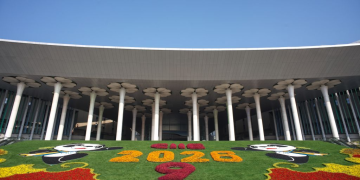

Travelers arriving at Shenzhen’s international airport this week are greeted by a message on screens: “Gather in Shenzhen. Witness the wonders.”
Among the visitors are leaders and business executives attending Asia-Pacific Economic Cooperation (APEC) events. They are gathering in a metropolis that many longtime residents still remember as little more than a sleepy town amid rice paddies and oyster beds.
Nearly half a century after China launched reform and opening up, the changes set in motion have produced one of the world’s most remarkable economic stories. Shenzhen is among its most striking chapters. And the miracle — in the city and across China — is still unfolding.
Shenzhen’s rise began in 1980, when China made the small town next to Hong Kong a testing ground for economic reform. More flexible policies opened the door to investment from overseas. Local businesses began producing for international markets, while foreign goods, production techniques and management expertise flowed in.
The experiment proved successful. One indication came in 1991, when China joined APEC — a milestone that highlighted how much the country and the wider world had to offer each other.
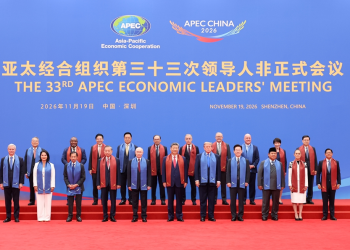
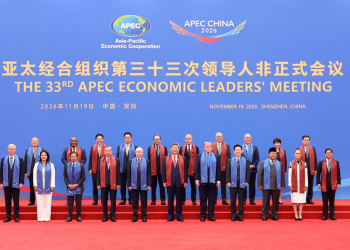
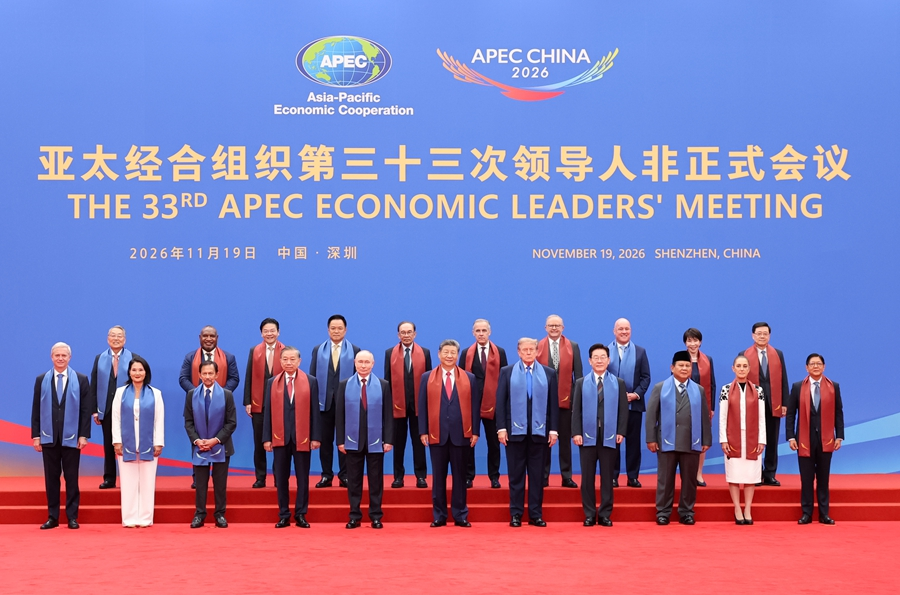
The Shenzhen meeting, scheduled for Wednesday and Thursday, will mark the third time China has hosted the APEC Economic Leaders’ Meeting, following the one held in Shanghai in 2001 and the other in Beijing in 2014.
Over the past quarter-century, China has evolved from an emerging economy striving to integrate into the global system to an economic powerhouse and a major engine of growth. Its rise has helped create prosperity well beyond its borders.
OPENING UP
China’s confidence in openness rests largely on its own experience. Shanghai, China’s first APEC host city, offers two contrasting chapters in that history.
The Western-style banks and trading houses along the Bund testify to the city’s early commercial prosperity. But they also recall a time when China found itself in an unequal position in the international order.
The city was forced open to foreign trade in the 1840s, after China’s defeat in the Opium War. The conflict reflected how prolonged seclusion could leave a country vulnerable in a rapidly changing world.
After a series of military defeats and diplomatic setbacks, the Qing court was compelled in 1901 to sign a protocol with 11 imperialist powers. It imposed a heavy indemnity and granted foreign powers further privileges in China.
A full century later, China was engaging with the world on a very different footing. In 2001, Shanghai welcomed leaders of APEC economies to discuss trade, investment and economic cooperation.
By then, the People’s Republic was more than half a century old, with a stronger economy and more developed institutions. There was plenty to fuel optimism that autumn.
China had just won the bid to host the 2008 Olympics, and talks on its accession to the World Trade Organization (WTO) had concluded. More than two decades of reform and opening up had reshaped the country and raised expectations for its future, both at home and abroad.
The photograph of Asia-Pacific leaders in traditional silk jackets became a defining image of the Shanghai gathering.
China joined the WTO that December. Liu Chenyang, director of the APEC Study Center of Nankai University in Tianjin, said China’s APEC membership had helped pave the way for this step. APEC’s flexible, gradual approach to cooperation and emphasis on voluntary action made it easier for the country to align its economic practices with international norms.
The country’s accession to the WTO gave domestic companies broader and more predictable access to overseas markets. It also exposed China’s own market to greater international competition.
In the years that followed, China became widely known as the “world’s factory.” From clothing and furniture to electronics, affordable goods made in the country found their way into homes around the world. Multinational companies reconfigured their production networks, more foreign investment poured in, and trade flourished.
For many Chinese families, these changes brought more job opportunities in cities, higher incomes, modern conveniences and better education for their children.
As economic globalization gathered pace, China benefited from overseas orders, investment and technological know-how. In turn, it offered the world a vast and highly capable manufacturing base and, increasingly, a fast-growing consumer market.
From 2001 to 2025, China’s overall tariff level fell from 15.3 percent to 7.3 percent, a reduction that went well beyond its initial WTO accession commitments. By the end of the first quarter of this year, the cumulative stock of foreign direct investment in China exceeded 4 trillion U.S. dollars, roughly ten times the figure in 2001, data show.
Foreign investors have continued to benefit from their presence in China. Returns on direct investment have run at around 9 percent in recent years, among the highest in the world. In the first five months of 2026, foreign-invested companies reinvested 35 percent more of their earnings in China than in the same period a year earlier.
“China has been a great leader in the opening-up process,” said Eduardo Pedrosa, executive director of the APEC Secretariat.
A NEW ERA
When APEC returned to China in 2014, the country’s growing economic weight was already changing its relationship with the rest of the world.
The country welcoming leaders to the picturesque outskirts of Beijing was the world’s second-largest economy and largest manufacturer. Yet the global recovery from the financial crisis remained uneven, regional conflicts had flared anew, and protectionism and unilateralism continued to cast a shadow over the international economic order.
China’s development mattered far beyond its borders.
He Xilin, an assistant research fellow at the China Institute of International Studies, said the 2014 APEC meeting marked China’s rise as an influential participant in regional cooperation, when the country began to play a more active role in shaping its agenda and advancing cooperation.
The Belt and Road Initiative, proposed in 2013, and the steps taken toward establishing the Asian Infrastructure Investment Bank in 2014 reflected that shift. At the Beijing meeting, China pledged 40 billion dollars to help establish the Silk Road Fund, an initiative designed to improve connectivity.
The problems these initiatives sought to address were familiar to China. Better roads meant lower costs for farmers bringing their produce to market. Reliable electricity kept factories running. More efficient ports helped businesses reach overseas customers and compete for orders.
China had built such infrastructure on a vast scale. It was now seeking to share its experience with other countries.
The APEC meeting in Beijing was held under the theme “Shaping the Future through Asia-Pacific Partnership.” It formulated a roadmap for a Free Trade Area of the Asia-Pacific, a vision first put forward in 2006, as well as the APEC connectivity blueprint for 2015-2025.
China’s vision of building a community with a shared future for humanity gave the country’s expanding international role a broader purpose, grounded in common interests and mutual support.
It envisages an open, inclusive, clean, and beautiful world of lasting peace, universal security, and common prosperity.
Change was also underway at home. One year before the 2014 APEC meeting, China embarked on an unprecedented reform drive that reached deep into the economy and society, covering everything from industry and finance to public services, social welfare and environmental protection, in a bid to further unleash market potential.
Ahead of the meeting, authorities temporarily shut down heavily polluting businesses in and around Beijing to improve air quality. The unusually clear skies were dubbed “APEC blue.” Chinese leaders pledged to make such blue skies a lasting feature.
More than a decade later, clear skies have become more commonplace, reflecting sustained efforts to curb pollution, upgrade the industrial structure and transform the energy mix.
China ratified the Paris Agreement on climate change in 2016. Today, the country supplies about 70 percent of the world’s solar modules and 60 percent of its wind power equipment. It has also recorded the largest and fastest increase in forest area worldwide.
In September 2025, China announced its climate commitments for 2035, pledging to cut economy-wide net greenhouse gas emissions by 7 to 10 percent from peak levels, raise the share of non-fossil fuels in energy consumption to more than 30 percent, and bring total installed wind and solar capacity to 3,600 gigawatts.
The year 2014 was a pivotal year in China’s poverty-alleviation campaign, following the introduction of a targeted strategy in November 2013.
The nationwide campaign lifted nearly 100 million rural residents out of poverty by 2021, eradicating absolute poverty in a country of 1.4 billion people. China thereby met the relevant target under the United Nations 2030 Agenda for Sustainable Development a decade ahead of schedule.
The experience highlights several factors relevant to fellow developing countries: economic growth is essential for poverty reduction; investment in physical assets must go hand in hand with investment in people; and targeted policies can deliver better results than the even distribution of resources.
SHAPING THE FUTURE
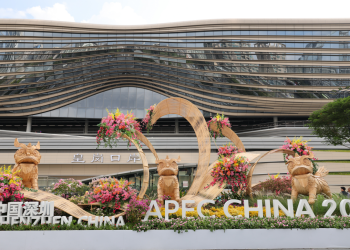
The choice of Shenzhen as the 2026 host offers a glimpse of how China is pursuing its next stage of development. Here, everyday life shows how innovation, openness and cooperation reshape the economy and create opportunities for others.
Over decades of manufacturing for markets at home and abroad, Shenzhen has built a tightly knit ecosystem that brings together component suppliers, engineers, mold makers and logistics firms.
Designs can be turned into prototypes in a matter of days, with materials and parts readily available nearby. The result is an unusually short path from concept to finished product.
Shenzhen-based Huawei, Tencent, DJI and BYD grew out of this environment, illustrating how such an ecosystem can nurture globally competitive companies. China now leads the world in producing more than 200 major industrial products and has built the largest and most comprehensive manufacturing system.
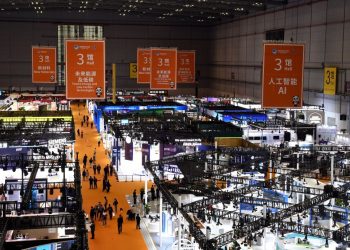
On factory floors, artificial intelligence is now changing manufacturing itself.
In a lithium battery workshop in Shenzhen’s Bao’an District, an AI-powered system monitors production and automatically adjusts robotic arms to meet the industry’s precision standards, eliminating the need to halt production for manual adjustments.
Such applications improve routine factory operations. But faster quotations, more precise production planning and fewer errors can also determine whether a company wins its next order.
Today, Chinese companies increasingly supply energy storage equipment, new energy vehicles, industrial automation systems and digital solutions overseas. Such exports often involve technical training and expertise in organizing production and building supply chains.
Beyond selling cars and building a factory in Cambodia, BYD provides training materials and instructors to help local educational institutions train more technicians.
China once benefited from the technology and expertise brought by foreign investment. Its companies now help other countries build their own production capabilities. Such ties extend beyond trade in goods, linking Chinese businesses’ growth more closely with local development.
These developments are unfolding against a challenging global backdrop. Weak global growth has widened development gaps and heightened security risks. Rapid technological change is opening new opportunities while raising questions over ethics, security and the rules needed to govern its use.
China is seeking to do more to help address these challenges. In May, it implemented zero-tariff treatment for imports from 53 African countries, easing market access for their goods. In July, representatives of 29 countries signed an agreement in Shanghai to establish the World Artificial Intelligence Cooperation Organization.
From trade and technology to climate change and regional security, China’s choices increasingly carry global implications.
The Shenzhen APEC meeting comes at a time when China’s ties with the Asia-Pacific are closer than ever.
As the largest trading partner of 13 APEC economies, China counts eight APEC members among its top 10 trading partners. It also accounts for more than 60 percent of the region’s economic growth, underscoring its growing importance to the Asia-Pacific’s economic future.
From Shanghai to Beijing to Shenzhen, researchers have observed a pattern in China’s hosting of APEC meetings: when consensus begins to fray, such meetings hosted by China often help bring economies back together.
As this year’s host, China is looking to build on those ties and give regional cooperation fresh impetus. The Shenzhen meeting is expected to push forward the free trade agenda, draw on China’s strengths in the digital economy and artificial intelligence, and help Asia-Pacific economies navigate technological transformation.
One key item on the agenda is closer coordination between the Regional Comprehensive Economic Partnership and the Comprehensive and Progressive Agreement for Trans-Pacific Partnership. Regional connectivity will also feature prominently, with leaders looking to build on work carried out under the APEC Connectivity Blueprint for 2015-2025.
In 2019, Shenzhen was designated by the central authorities as a “pilot demonstration area of socialism with Chinese characteristics” to develop replicable reforms for other regions in China.
China has set its own timetable: to basically achieve socialist modernization by 2035 and become a great modern socialist country in all respects by mid-century. Achieving these goals will further unlock China’s economic potential and create more opportunities for countries around the world.
More than two decades after China first hosted APEC, the spotlight is returning to China. The world is looking for greater synergy to power the Asia-Pacific and beyond, translating the vision of shared prosperity into tangible progress.