








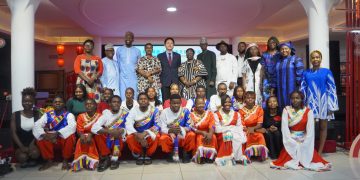




A 2026 Report by the Centre for Contemporary China-Africa Research in Nigeria
Preamble
China as an emerging global power has greatly challenged the unipolar world as well as its accompanying perpetual tendencies in international relations, most especially looking for ways to strengthen the developing nations. Under Xi Jinping political leadership, China employed a diplomatic model of economic cooperation, strategic partnership, non-interference in domestic affairs, and mutual development. One of the key aspects of his foreign policy is his focus on economic integration and cooperation, including the Belt and Road Initiative (BRI), which aims to expand China’s economic influence in the countries involved. This strategy has enhanced China’s footprint in Africa, putting Nigeria among China’s major strategic partners in Africa.
Pragmatic engagement, economic diplomacy, multilateral cooperation and a shared future among nations are the essence of Xi Jinping’s diplomatic style. The diplomacy of Xi is more focused on the principles of mutual respect, sovereignty, and non-interference, while also rejecting the imposition of political conditions on aid and investment as done in the West. Such a diplomatic approach has helped China develop close ties with numerous African nations, such as Nigeria, where its bilateral ties have grown in transportation, energy, telecommunications, manufacturing and trade. As such, the significance of knowing the nature of Xi’s diplomacy is taken into consideration to understand its impact on Nigeria’s foreign policy and developmental agenda.
The diplomatic artistry of Xi Jinping is his ability to utilize political engagement, economic incentives, cultural exchanges and strategic partnerships in a balanced manner, in order to promote China’s interests while providing development opportunities for partner countries. This is where the artistry of diplomacy has manifested in Nigeria with several infrastructure investments such as railway rehabilitation, airports development, power generation projects and industrial investments supported by Chinese investments and loans. The engagements have made the relations between the two countries even closer and enhanced the presence of China in Nigeria’s development agenda. It is also due to the growing cooperation that people-to-people relations, educational exchanges, and technological cooperation between the two countries have been improved.
In addition, Xi Jinping’s diplomacy has contributed to the enhancement of economic growth and development in Nigeria. Chinese investments have played a vital role in establishing key infrastructure to enable economic operations and improve connectivity among various parts of the country. The positive developmental impacts of the China-Nigeria relations in contemporary Xi’s era encompass the development of transportation infrastructure, Foreign Direct Investment (FDI), job creation, technology transfer and many others. With Nigeria, China is among the foremost trading partners due to several bilateral and economic partnerships that offer opportunities for economic expansion and industrial growth.
Xi’s diplomatic skills embody effective strategic communication, economic engagement, ideological narrative, and institutional diplomacy, all aimed at reshaping China’s position in international governance. It has been successful that Xi has been able to shift the policy of China’s foreign relations from mostly being reactive to more proactive and assertive in engaging with the world since 2013. His diplomatic virtuosity manifests itself in the fact that he works with statecraft instruments like economic incentives, infrastructure diplomacy, cultural exchange and multilateral cooperation to promote China’s national interest in a way that appears to be beneficial for the partner states (Shambaugh, 2020).
One of Xi’s signature traits as a diplomat has been the role of economic diplomacy in advancing foreign policy. The Belt and Road Initiative (BRI) has connected China with Asia, Africa and Europe in many different ways – funding and building transportation, energy, telecommunication and industrial infrastructure. This demonstrates the financial power being converted to political leverage, establishing a more profound mutual dependence between China and the countries concerned and laying the groundwork for long-term strategic partnerships, which will help strengthen China’s influence and power. This way, economic opportunities turn into diplomatic capital.
The other characteristic of Xi’s diplomacy is his use of the concept of a “Community with a Shared Future for Mankind.” This vision was meant to help convey the sense of a need for collective action to deal with problems such as poverty, climate change, terrorism and pandemics. Through this narrative, Xi helps to convey a message that China is a responsible world player that is dedicated to an inclusive development path and global peace. Such ideological positioning builds up China’s soft power, and assists the domestic legalization of China’s growing international presence, especially among developing countries which are looking for alternative development partners.
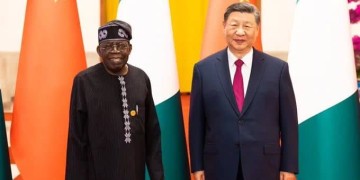
China’s policy of diplomacy is centered around sovereign equality, non-intervention, cooperation based on mutual interest, and transferring infrastructure, trade and technology. This has coincided with massive investments in railways, ports, energy and telecommunication infrastructure in Nigeria, which has helped to boost economic activities and connectivity. China has enhanced bilateral ties and enhanced its influence in West Africa through carefully negotiated agreements and a persistent diplomatic effort,
President Xi’s diplomatic prowess is also demonstrated in his active participation in multilateral institutions and in reform of global governance. China has been more prominent in the United Nations, BRICS and the Shanghai Cooperation Organisation, the G-20, and has advocated for reform of the international governance structures that are more in tune with the developing world interest. The multilateral interaction will be helpful for China’s legitimacy and extends its bilateral relationship from multilateralism.
Click the link below to download the full report: