







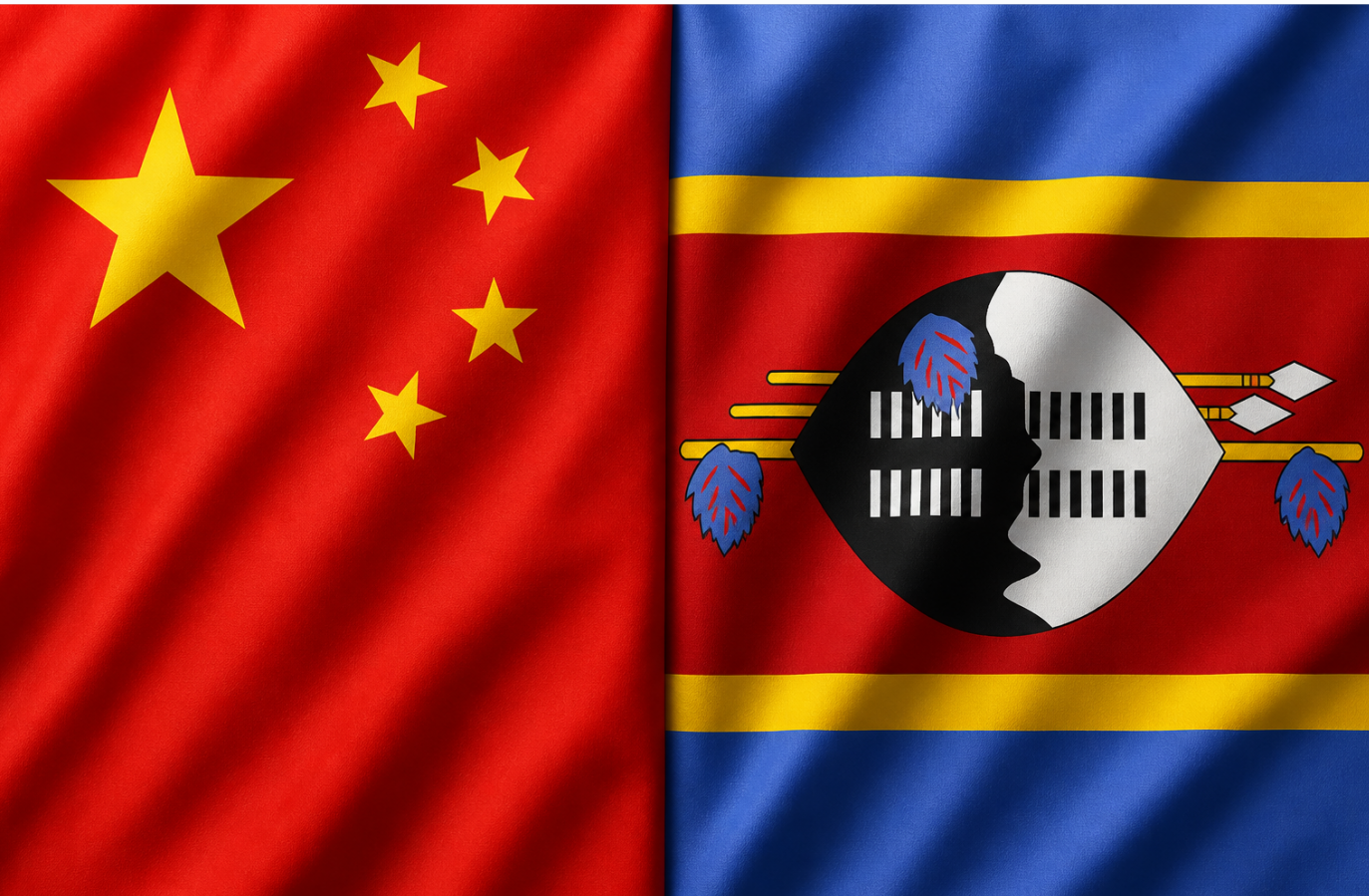
China has called on Eswatini and a number of other countries to refrain from supporting what it described as “Taiwan independence” separatist activities, following a recent visit by Taiwan leader Lai Ching-te.
A spokesperson for China’s Foreign Ministry made the appeal on Saturday, urging relevant countries to “recognise the direction of historical development” and align with the one-China principle, which Beijing says reflects a widely accepted norm in international relations.
The remarks came after Lai travelled to Eswatini aboard a private aircraft reportedly provided by Mswati III. China views such engagements as official interactions that challenge its sovereignty claims over Taiwan.
In a strongly worded statement, the spokesperson criticised Lai’s trip, arguing that it took place shortly after an earthquake in Taiwan, and described the visit as politically motivated. The spokesperson further accused Taiwan’s ruling Democratic Progressive Party (DPP) of seeking closer ties with external partners in ways that Beijing opposes.
China maintains that Taiwan is an integral part of its territory and has consistently rejected any form of official exchanges between Taipei and countries that maintain diplomatic relations with Beijing. Only a small number of countries, including Eswatini, formally recognise Taiwan.
Reaffirming its position, the Chinese government said efforts by pro-independence forces to expand Taiwan’s international space would not alter what it described as the “established fact” of China’s sovereignty over the island.
Taiwan, however, operates as a self-governing entity with its own political system and continues to pursue international partnerships, a stance that remains a key source of tension across the Taiwan Strait.