










Media scholar and public affairs analyst, Dr Austin Maho, has urged Nigerian journalists and media executives to study China’s poverty alleviation experience critically and adapt relevant lessons to Nigeria’s realities.
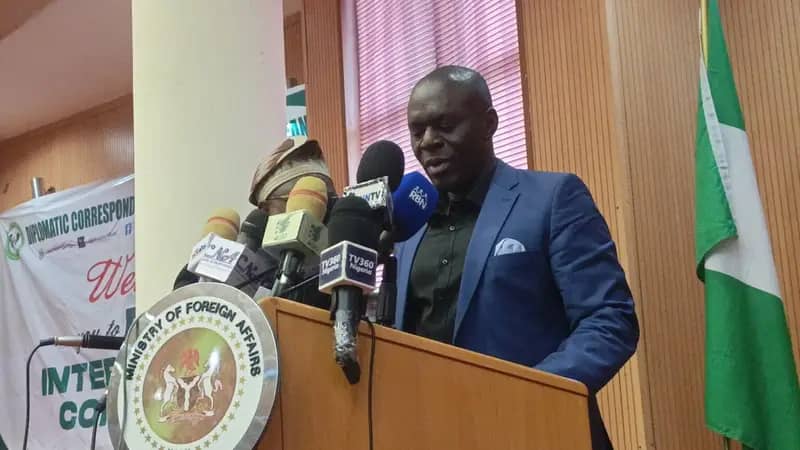
Maho made the call in a paper presented at a workshop organised by the Diplomatic Correspondents’ Association of Nigeria (DICAN) on Nigeria’s poverty alleviation and China’s development model in Abuja on Tuesday.
He said China’s experience demonstrated the importance of sustained political commitment, reliable data, targeted interventions and long-term development planning, but cautioned that Nigeria could not copy the model wholesale because of differences in political systems, state capacity and economic structures.
“Models cannot be imported wholesale. They must be evaluated, communicated, and contextualised,” Maho said, describing the media as a bridge between international development experiences and domestic policy debates.
Maho identified targeted poverty alleviation, prioritisation of vulnerable communities, strong institutional coordination and long-term commitment as key elements of China’s approach.
He said Nigeria would need stronger data systems and institutional capacity to effectively identify and address poverty, while warning that the country’s rapidly growing population made poverty reduction an urgent national priority.
The media expert urged journalists to go beyond reporting government announcements and development ceremonies by investigating whether projects deliver tangible benefits to communities. He also called for more grassroots reporting that shows how poverty and development policies affect ordinary Nigerians.
Maho said diplomatic correspondents should maintain professional balance by neither becoming cheerleaders for foreign development models nor dismissing international cooperation, but should instead evaluate what can realistically be adapted to Nigeria.
He called on media organisations to strengthen development diplomacy reporting, data journalism and follow-up coverage of China-Africa projects to measure their actual impact.
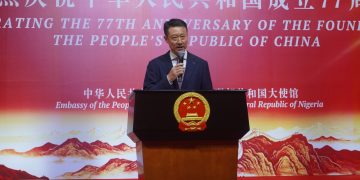
Also speaking, Chinese Ambassador to Nigeria Yu Dunhai, represented by the Counselor of the Economic and Commercial Office of the Chinese Embassy in Nigeria, Sun Xuekun, said China had lifted more than 800 million people out of poverty since the launch of reform and opening-up in 1978, accounting for more than 70 per cent of global poverty reduction.
Sun said China eradicated absolute poverty by the end of 2020 after lifting 98.99 million rural poor residents, 832 impoverished counties and 128,000 impoverished villages out of poverty.
He attributed the achievement to strong leadership, targeted poverty alleviation, development-driven policies, infrastructure investment and measures to prevent people from falling back into poverty.
Sun said China’s experience demonstrated the importance of a people-centred approach, strong political commitment, policies adapted to local realities and broad social participation.
He added that China continued to share its development experience through international cooperation initiatives, including the Global Development Initiative and the Belt and Road Initiative.