



















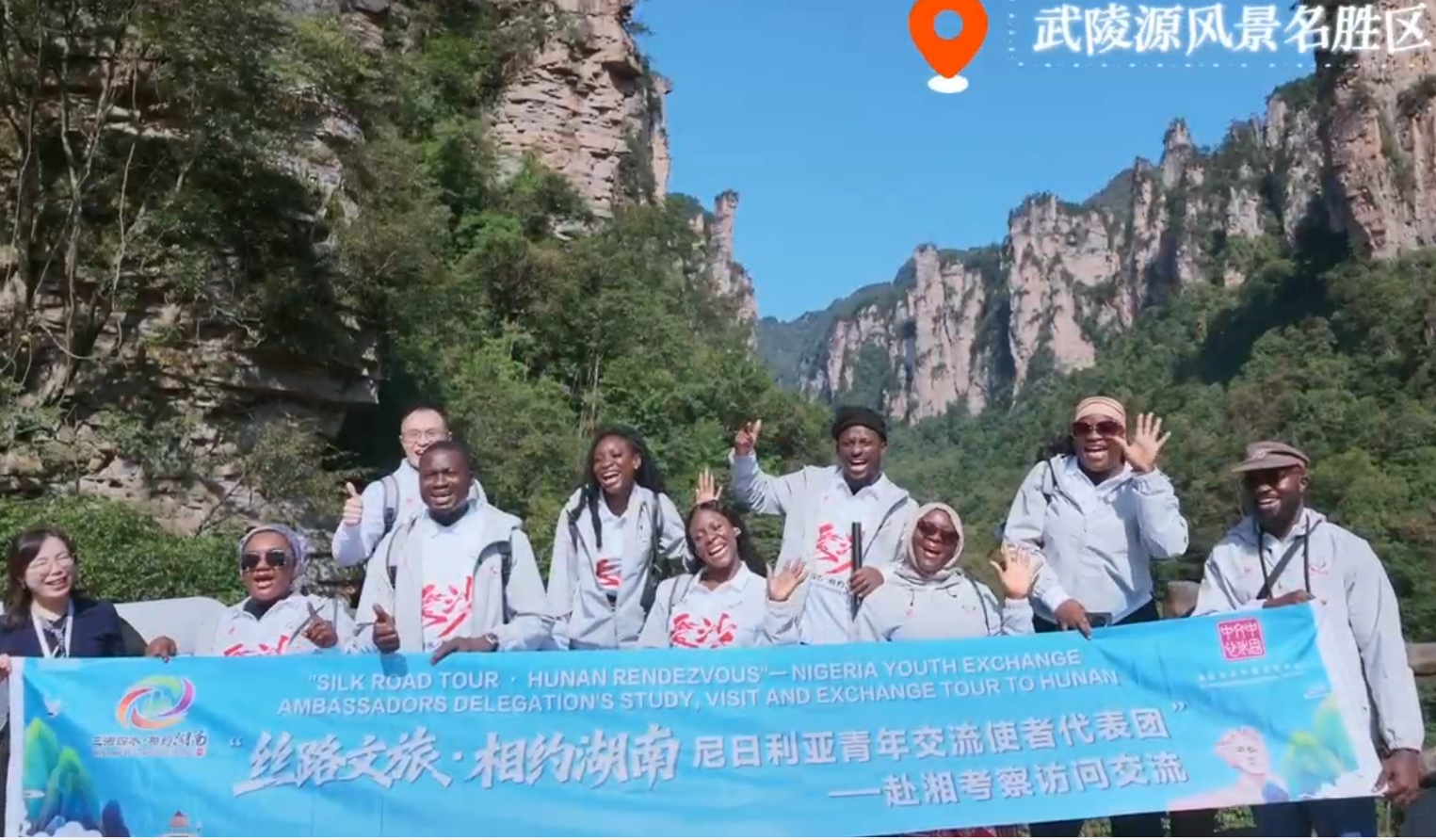
As part of their tour of Hunan Province, China, members of the Nigeria Youth Exchange Ambassador delegation visited two of Zhangjiajie’s most spectacular natural attractions, Tianmen Mountain National Forest Park and the iconic Hallelujah Mountain.
At Tianmen Mountain, the delegation experienced an exciting cable car ride to the mountain summit, offering breathtaking views of the surrounding mountains and valleys. They also explored the famous cliffside walkways, providing a thrilling experience high above the ground.
Another major attraction was the spectacular 99-bend mountain road, popularly known as the Road to Heaven, which leads to the magnificent Tianmen Cave, also called Heaven’s Gate. The visitors also learned about the remarkable underground escalator system, which stretches approximately 900 metres through the mountain, providing tourists with access to the natural archway.
The delegation also visited the famous Hallelujah Mountain, renowned for inspiring the spectacular floating mountains featured in James Cameron’s blockbuster movie, Avatar.
To reach the mountain’s summit, the visitors boarded the Bailong Elevator, recognised as the world’s tallest outdoor elevator, rising 326 metres. The ride took approximately 88 to 90 seconds, transporting them to a plateau about 1,074 metres above sea level.
At the summit, they enjoyed a breathtaking 270-degree panoramic view of Zhangjiajie’s towering sandstone pillars, the spectacular natural formations that have made the area a major international tourism destination.
Formerly known as the Southern Sky Column, the mountain was renamed Hallelujah Mountain in January 2010 in recognition of its connection to the movie Avatar.
The visits offered the Nigerian delegates an opportunity to experience firsthand the beauty of China’s natural heritage and its impressive investment in tourism infrastructure, engineering and destination development.
Zhangjiajie, with its spectacular landscapes and innovative tourism facilities, provides valuable insights into how natural attractions can be preserved, developed and promoted to boost tourism, create economic opportunities and attract international visitors.