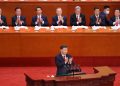












Chinese Premier Li Qiang has called for greater global cooperation, openness and technological advancement as key drivers for creating new market opportunities and sustaining global economic growth.
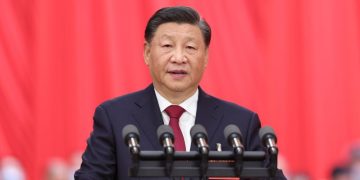
Li made the remarks on Sunday while delivering a keynote address at the opening ceremony of the China Development Forum 2026 in Beijing, where he emphasized that China’s steady economic growth will continue to benefit the global economy.
According to the premier, the world is currently experiencing profound and complex transformations, marked by competing trends such as rising protectionism alongside growing calls for cooperation and development.
He noted that while traditional industries are facing challenges, emerging sectors are gaining momentum, even as the global rules-based order encounters disruptions and increasing calls for reform.
Li stressed that markets, though increasingly competitive, can be expanded through openness and innovation rather than restricted by protectionist policies.
“History has shown that global economic recovery and prosperity come from creating new markets through openness and technological progress, not from competing over existing ones,” he said, adding that protectionism is not a sustainable solution.
He reaffirmed China’s commitment to high-level opening-up, noting that the country will continue to increase imports of high-quality goods and promote balanced global trade within a rules-based framework.
On competition, Li said development naturally involves rivalry, but healthy competition combined with cooperation can deliver mutual benefits.
He rejected claims that China’s industrial strengths are driven by subsidies or protectionism, attributing them instead to sustained reforms, innovation-driven strategies, and the hard work of Chinese enterprises.
“Healthy competition injects strong momentum into development, while disorderly competition must be avoided,” he stated.
Li added that China will continue to promote a fair and orderly market environment while working with international partners to ensure the stability and security of global industrial and supply chains.
Looking ahead, the premier acknowledged existing challenges but expressed confidence in future global growth, urging countries to take responsibility and pursue practical cooperation.
He highlighted China’s upcoming development roadmap under the 15th Five-Year Plan (2026–2030), describing it as both a national blueprint and an opportunity for global economic engagement.
China, he said, will prioritize high-quality development, maintain stable economic growth, and further improve its business environment, including ensuring equal treatment for foreign enterprises operating in the country.
The forum, hosted by the Development Research Center of the State Council, attracted about 750 representatives from business and industry across China and around the world.