
















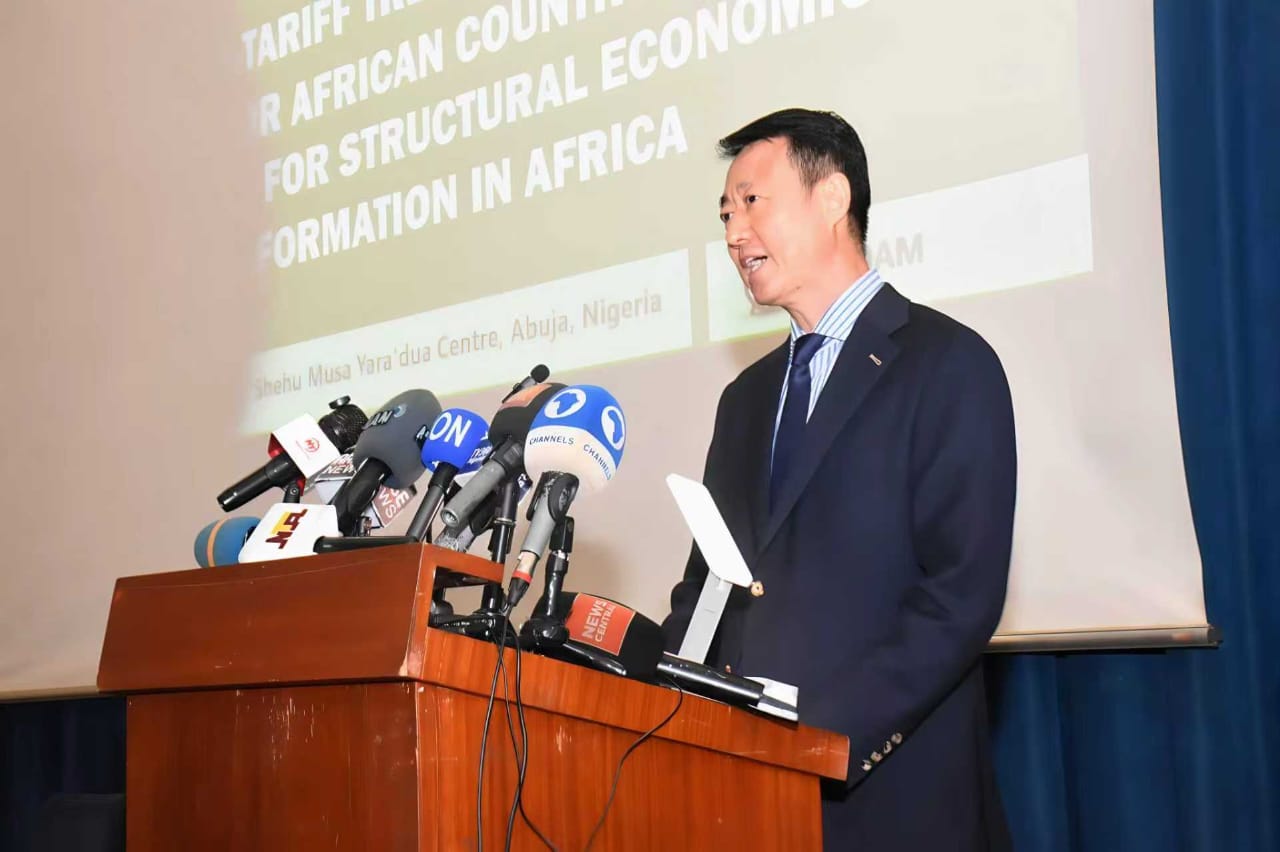
Chinese imports from Nigeria surged by 80 per cent to $2.3 billion in the first half of 2026, following the implementation of China’s zero-tariff policy for African countries, Chinese Ambassador to Nigeria, Yu Dunhai, has said.
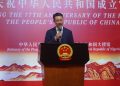
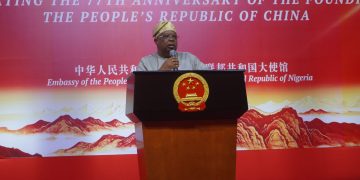
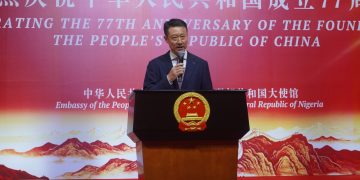
Yu disclosed this on Friday at an international seminar on “China’s Zero-Tariff Treatment for African Countries and Its Implications for Structural Economic Transformation of Africa”, organised by the Centre for China Studies (CCS) at the Yar’Adua Conference Centre, Abuja.
He said total China-Nigeria trade reached $18 billion in the first half of 2026, representing a 35 per cent year-on-year increase, while Nigerian exports to China grew by more than 40 per cent in both May and June.
Yu said China-Africa trade also reached a record $207 billion during the period, while Chinese imports from Africa stood at $29 billion between May and June, up 24 per cent year-on-year.
He attributed the growth to China’s decision to grant zero-tariff treatment to all 53 African countries with diplomatic relations with Beijing, effective May 1, 2026.
The ambassador said the policy was already lowering trade costs and opening China’s market of about 1.4 billion consumers to African products.
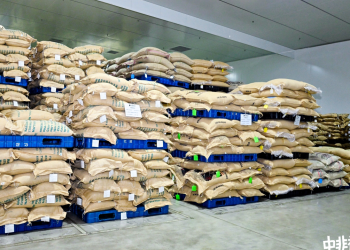
For Nigeria, he said tariff reductions of between three and 10 per cent were delivering immediate savings. Every 100 tonnes of Nigerian sesame exported to China, he noted, saves about $11,000, while annual exports of 7,000 tonnes of cattle bone granules could save nearly $450,000.
He also disclosed that a single shipment of 23,000 tonnes of Nigerian liquefied propane generated about $300,000 in tax savings.
Yu urged Nigeria to improve product quality, supply reliability and local processing, while calling for stronger trade and investment institutions.
He said China was ready to support Nigerian businesses with technical assistance, equipment and technology and was willing to work with local partners to establish industrial demonstration parks.
The ambassador also advocated a formal Agreement on Economic Partnership for Shared Development between China and Nigeria to turn temporary tariff preferences into lasting institutional guarantees, noting that 38 African countries had signed framework agreements with China towards early-harvest negotiations.
Speaking at the seminar, CCS Director Charles Onunaiju said China’s zero-tariff policy was the result of more than two decades of progressively expanding preferential market access for Africa.
He traced its origin to 2003, when China introduced zero-tariff treatment for 194 tariff lines covering 25 African countries, adding that the policy was expanded between 2022 and 2024 to cover 98 per cent of tariff lines for 27 African countries.
Onunaiju said the expanded access should be viewed as an opportunity for Africa to drive structural transformation, rather than simply increase exports of raw materials.
He urged African countries to tackle non-tariff barriers and strengthen the African Continental Free Trade Area (AfCFTA) to harmonise standards, improve customs procedures and develop regional value chains.
He said Africa’s large market, competitive labour costs and youthful population provided the continent with the foundation to develop manufacturing capacity and move higher up global value chains.
The Permanent Secretary, Ministry of Foreign Affairs, Ambassador Dunoma Umar Ahmed, said Nigeria’s priority should be to ensure that greater access to the Chinese market translates into manufacturing, job creation and value addition at home.
Ahmed said Nigeria must move from “exporting resources to exporting value”, stressing that crude oil, agricultural commodities and solid minerals should increasingly feed domestic processing and manufacturing industries.
He called on Chinese and other foreign investors to establish factories, processing plants, technology centres and logistics networks in Nigeria while developing local suppliers and transferring technology.
“Nigeria is open for business. But increasingly, we seek investment that does more than extract. We seek investment that builds,” he said.
Ahmed said Nigeria’s large market, natural resources, entrepreneurial population and AfCFTA membership positioned the country as a potential manufacturing hub for Africa.
He also urged improvements in infrastructure, energy, regulatory predictability, trade facilitation and skills development to make productive investment more attractive.
“China’s preferential trade measures can open the door. Africa must now build the productive capacity to walk through it,” Ahmed said.
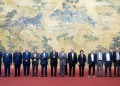
The seminar brought together government officials, diplomats, manufacturers, traders, farmers, exporters, students, entrepreneurs and government institutions to examine practical ways of maximising the opportunities created by China’s zero-tariff policy.