











By:
-Li Chunguang, Beijing Foreign Studies University, PRC &
-Sheriff Ghali Ibrahim, University of Abuja, Nigeria
The year 2025 marks the 80th anniversary of the United Nations. As a vital global governance system, the international governance mechanism centered on the UN, along with fundamental international norms based on the UN Charter and international law, has played a pivotal role in keeping the peace and development in the world. However, in recent years, amid the collective rise of the Global South, intensified geopolitical tensions, and escalating zero-sum games, the authority of the UN system has been eroded. This has resulted in systemic injustices faced by many developing nations, including African countries, as they seek to safeguard their interests and participate in global governance.
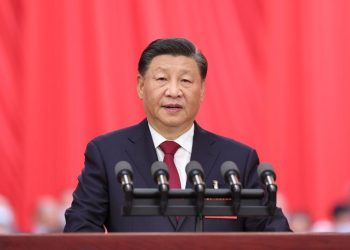
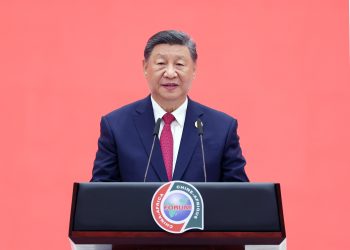
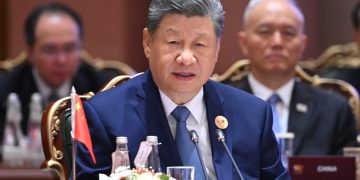
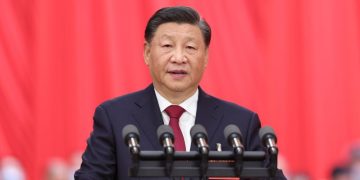
Although developing nations, including China and African countries, have progressively enhanced their population scale, economic contributions, and governance capabilities, they remain at a disadvantage in terms of governance actors, mechanisms, and discourse. Reflecting on historical dimensions, the 2025 African Union Summit proposed rectifying historical injustices by demanding reparations from former colonial powers for the devastation inflicted on African nations through the slave trade, colonial rule, and economic reforms. Against the backdrop of a global governance deficit, Chinese President Xi Jinping proposed a GRI initiative centered on “upholding sovereign equality, adhering to international rule of law, practicing multilateralism, advocating people-centered development, and emphasizing action-oriented approaches.”
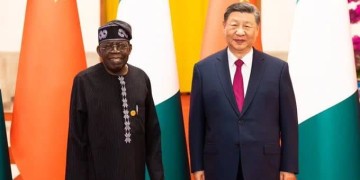
This initiative resonates with the reflections of developing nations like Africa on the existing global governance system’s power politics, protectionism, and hegemonic ideologies, gaining widespread acceptance worldwide. Regarding this initiative, Nigerian Foreign Ministry Spokesperson Ebienfa stated: “The Nigerian government supports China’s global governance initiative and believes its core principles align with Nigeria’s national objectives. As Africa’s largest economy and a key participant in multilateral diplomacy, Nigeria and China will advance inclusive governance in areas such as UN reform, artificial intelligence, and cyberspace under this initiative, driving sustained reform of the global governance system.”
China’s global governance initiative holds significant practical relevance. The protracted Ukraine crisis, the persistent Palestinian issue, and the actions of certain nations—advocating national prioritization, decoupling, withdrawing from international organizations, and halting international aid within multilateral political, economic, and cultural frameworks—have created substantial deficits in global development, security, culture, and governance. President Xi Jinping emphasized that “in response to the collective rise of the Global South, all nations should implement the four major global initiatives, jointly advance the building of a community with a shared future for mankind, and resolve common crises worldwide.”
This initiative breaks away from the hegemonic practices of isolationism, zero-sum games, and intimidation by certain nations, embodying pragmatic cooperation among all countries through a process of consultation, sharing, and joint construction. Global governance initiative, integrated with the global security, civilization, and development initiatives, signifies a transformation in the subjects, methods, and objectives of the global governance system. Unlike the development models of some nations characterized by white supremacy, trade barriers, and unilateralism, the global governance initiative reshapes the “shared values” within multilateral cooperation, helping to address issues such as “structural imbalances” and “inefficiencies” in global governance. Countries worldwide can advance the coordinated development of the global governance system by strengthening “coordination among actors, coordination of concepts, coordination of platforms, and coordination of rules.”
The Global South has undergone dynamic evolution from the Bandung Conference, the Non-Aligned Movement, the Group of 77, and the Third World, to the emergence of multilateral mechanisms spontaneously formed by developing nations and emerging economies, such as the BRICS cooperation framework and the Shanghai Cooperation Organization. Unlike the “small clubs” of developed nations like the G7, Global South countries including African nations—have long occupied unequal positions within the global governance system. Consequently, rectifying historical injustices and dismantling Western zero-sum thinking have become fair and reasonable demands for Global South nations, particularly African countries. At the G20 Summit, the transition toward an international governance system characterized by “African leadership, African consent, and African benefit” has emerged as a new trend in the development of the Global South. The urgent need to advance a global governance framework widely embraced by African nations and other Global South countries is now undeniable.
What constitutes global governance? This concept emerged during the era of multipolar world development in the 1990s. Transcending the boundaries of individual nations, transnational and transregional international organizations have shaped today’s global governance institutions and mechanisms. Unlike the Western-oriented global governance that emerged in the 1990s, the Global Governance Initiative emphasizes the importance of developing countries’ governance actors, institutions, platforms, values, and outcomes. It aims to break free from their “governed” status in political, economic, trade, technological, and aid sectors.
Equal, inclusive, comprehensive, and systematic multilateral governance has become a widely shared consensus among nations. Implementing the global governance initiative will help refine the current relatively lagging global governance system. Moreover, China’s advocacy for this initiative does not seek to establish a new framework from scratch. Instead, it firmly upholds the authority and central role of the United Nations, supports the UN in implementing the Future Pact, and promotes solidarity and cooperation among nations to collectively address challenges from all sides.
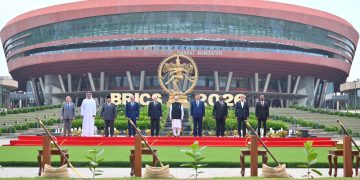
In recent years, confronting the multifaceted challenges faced by Global South nations such as Nigeria, India, South Africa, Brazil, and Russia, China has actively leveraged multilateral platforms that bring together Global South countries—including the BRICS Plus mechanism, G20+, and the Forum on China-Africa Cooperation to advance the reform and development of the global governance system.
The collective rise of Global South nations and African countries has gained enhanced voice and influence. The global governance system is shifting toward greater fairness and rationality, fostering broader cooperation among Global South nations. It also facilitates the following:
- Promoting Enhanced Voice and Influence for African Nations
The emergence of the global governance system has compelled developed nations to acknowledge the development and contributions of Global South countries, including Africa, thereby amplifying their influence within the global governance framework.
The inaugural G20 Summit in South Africa, the successive additions of Egypt and Ethiopia to the BRICS framework, Uganda and Nigeria becoming BRICS partner countries, and the successful China-Africa Cooperation Forum Summit collectively propelled Global South nations including African countries—toward achieving independent development while gradually reducing reliance on Western nations.
In advancing political, economic, and security integration, African nations have strengthened the pivotal role of the African Union’s coordination mechanisms. Guided by Pan-Africanism and the Ubuntu spirit, countries are fostering mutual cooperation in global governance to counter interference by developed nations in the territorial integrity, sovereignty, and domestic affairs of certain African states.
Despite this, some nations persist in using false pretexts like religion and human rights to threaten and interfere with African countries. While safeguarding their own interests, African nations have shattered Western hegemony and the law of the jungle. This helps lead the Global South in collectively enhancing Africa’s voice and influence, while actively countering sanctions imposed by certain countries.
- Advancing Fair and Reasonable Reforms in Global Governance
The African Union’s accession to the G20, the appointment of the first African woman as WTO Director-General, and the increased ratification of intangible cultural heritage by African nations all demonstrate how, under the framework of global governance initiatives, African countries are actively seeking changes in the global governance system commensurate with their international standing.
As data indicates, since the early 21st century, the rapid development of developing countries and emerging markets, including African nations, has contributed up to 80% to global economic growth. Yet, the Global South, including most African countries, has not enjoyed commensurate leadership and voting rights. For instance, the International Monetary Fund adjusted quotas and voting rights in 2016, increasing developing countries’ quotas by 6 percentage points. Yet, least developed countries hold only 3.5% of voting rights—far below the 23.8% target set for the United Nations. Furthermore, the fact that six G7 member states command over half of the IMF’s voting rights has sparked questions from Global South nations regarding equitable representation.
Despite the significant contributions made by Global South nations in balancing development, security, and governance, the current unreasonable global governance system traps African countries and other Global South nations within an unjust framework. Safeguarding the collective identity, collective voice, and collective stance of the Global South will help steer reforms in the global governance system toward a more equitable and rational direction.
- Promoting Broader International Cooperation Between Africa and Global South Nations
The Global Governance Initiative has advanced South-South cooperation among developing countries. While gradually expanding exchanges and collaboration between African nations and other Global South countries, it has also fostered development within the Global South in sectors such as infrastructure, energy, and agriculture. This initiative has further propelled and guided Global South nations in jointly addressing the challenges of globalization.
Open and inclusive international multilateral cooperation has fostered multifaceted collaboration in trade, technology, and other domains, crystallizing a distinctive value proposition for Global South cooperation. For instance, through solidarity and coordination, Global South nations have avoided being drawn into the geopolitical rivalries of Western powers or the turmoil of color revolutions.
The GRI Initiative will help African nations strengthen multilateral cooperation mechanisms, preventing unilateral hegemonic politics, protectionism, and tariff policies from creating divisions, fragmentation, and conflicts in their political systems and ideologies.
In conclusion therefore, it is pertinent to argue that, in the face of the collective rise of the Global South, a fair and reasonable global governance system will help propel the world toward greater democratization, peaceful international system and development.