













By Professor Udenta O. Udenta
The June 2026 publication of ‘More Just and Equitable Global Governance: China’s Principles, Proposals and Actions’ by the State Council Information Office of the People’s Republic of China represents one of the most consequential contributions to contemporary debates on the future of international governance. At a time when the international system is increasingly strained by geopolitical rivalries, widening inequalities, persistent development deficits, climate challenges, and growing dissatisfaction with existing global institutions, the white paper offers a comprehensive critique of the prevailing order while advancing an alternative vision anchored on sovereign equality, multilateral cooperation, international law, and inclusive development.
Far from being a mere diplomatic statement, the document is a carefully articulated philosophical and policy framework that seeks to address the growing disconnect between twenty first century realities and institutions largely shaped by the power configurations of the post Second World War era. Its central proposition is both simple and profound: a stable and sustainable international order can only emerge when all nations, regardless of size or economic strength, possess a meaningful voice in shaping the rules that govern humanity’s collective future.
The significance of this white paper lies not only in what it says about China’s global ambitions, but also in what it reveals about the changing aspirations of the Global South. For decades, developing nations have sought a more representative international system capable of reflecting their demographic, economic, and political importance. China’s call for a more just and equitable model of global governance therefore resonates beyond Beijing, finding increasing support among countries that perceive existing institutions as insufficiently responsive to their interests and developmental priorities.
Whether one agrees entirely with China’s prescriptions or not, the white paper raises questions that can no longer be ignored: Can global governance remain legitimate if large segments of humanity remain underrepresented in decision making? Can international stability endure when economic benefits and political influence are concentrated within a narrow circle of states? By confronting these questions directly, China has placed itself at the centre of an emerging global conversation about fairness, representation, and shared prosperity, offering a vision that many regard as an important step toward a more balanced and democratic international order.
The international order stands at an inflection point. The institutions that have underpinned global governance since the conclusion of the Second World War are confronting challenges of legitimacy, representation, and effectiveness unprecedented in recent decades. Economic power has dispersed across continents, new centres of influence have emerged, and the aspirations of developing nations have grown increasingly difficult to ignore. Yet many of the mechanisms through which global affairs are managed continue to reflect the geopolitical realities of a bygone era.
It is within this context that China’s vision for a more just and equitable system of global governance has attracted increasing attention. More than a mere diplomatic proposition, it represents an attempt to re-imagine how international relations, economic development, and multilateral cooperation should function in an increasingly interconnected world.
The central premise is deceptively simple: a world that has fundamentally changed requires institutions capable of changing with it.
The Imperative of Reform
One of the most compelling arguments advanced by China is that the architecture of global governance no longer adequately reflects contemporary economic realities.
Emerging economies now account for a substantial share of global growth, trade, industrial production, and innovation. Countries across Asia, Africa, Latin America, and the Middle East have become indispensable contributors to global prosperity. Nevertheless, decision making within many international institutions remains disproportionately concentrated among a relatively small number of advanced economies. Such asymmetry inevitably raises questions concerning legitimacy.
A governance system derives its authority not solely from historical precedent but from its capacity to represent the interests of those it seeks to govern. As global economic gravity shifts, demands for greater representation become not merely desirable but unavoidable.
China’s advocacy for reform within institutions such as the United Nations, the International Monetary Fund, and the World Bank reflects this broader concern. The objective is not the dismantling of the existing order but its adaptation to contemporary realities.
Economic Development as a Pillar of Global Stability
Perhaps the most distinctive feature of China’s approach lies in its insistence that development occupies a central place within global governance. For decades, international discourse has often prioritised political frameworks whilst treating economic transformation as a secondary concern. China’s experience suggests the opposite. Sustainable governance, social stability, and national resilience are difficult to achieve in the absence of broad based economic development.
This philosophy is reflected in the Global Development Initiative, which seeks to place poverty reduction, infrastructure development, food security, digital transformation, and sustainable growth at the heart of international cooperation.
The underlying logic is difficult to dismiss. A society burdened by unemployment, inadequate infrastructure, and chronic underdevelopment is unlikely to enjoy long term political stability. Economic empowerment is not merely a development objective; it is a governance imperative.
For Africa, where infrastructure deficits and development financing gaps remain significant obstacles, this perspective carries particular relevance.
The Belt and Road as Economic Diplomacy
No discussion of China’s vision for global governance can be complete without reference to the Belt and Road Initiative. Often misunderstood solely as an infrastructure programme, the initiative represents a broader exercise in economic diplomacy. Through investments in transportation networks, energy infrastructure, ports, railways, and industrial corridors, it seeks to enhance connectivity between nations and facilitate economic integration.
Critics have raised legitimate concerns regarding debt sustainability, project transparency, and geopolitical influence, yet it is equally undeniable that the initiative has provided many developing countries with access to infrastructure financing that might otherwise have remained unavailable.
From China’s perspective, economic interdependence promotes stability, reduces barriers to development, and creates shared prosperity. Whether one accepts this argument in its entirety or not, the initiative has unquestionably altered the landscape of international development finance.
Sovereignty and Strategic Autonomy
Another cornerstone of China’s approach is its emphasis on sovereign equality. In an era characterised by sanctions, geopolitical rivalries, and competing ideological narratives, China consistently advances the principle that nations should retain the freedom to determine their own developmental pathways without external coercion. This principle resonates strongly throughout much of the Global South.
Many developing countries possess historical memories of colonial domination, foreign intervention, and externally imposed policy prescriptions. Consequently, calls for mutual respect, non interference, and sovereign autonomy find a receptive audience.
The challenge, naturally, lies in ensuring that such principles are applied universally rather than selectively. Nonetheless, the emphasis on sovereign equality remains a significant feature of China’s diplomatic engagement.
Security Through Cooperation
Economic development alone cannot sustain global order. Stability also requires security. Recognising this reality, China has advanced the Global Security Initiative, which advocates cooperative security arrangements, dialogue based conflict resolution, and the rejection of Cold War mentalities.
The proposal rests upon the premise that security should be indivisible. In other words, one nation’s security should not be achieved at the expense of another’s insecurity.
While critics debate the practical implications of this doctrine, its broader philosophical foundation reflects a growing recognition that contemporary security challenges, from terrorism and cyber threats to regional conflicts and transnational crime, demand collective rather than unilateral responses.
Civilisational Pluralism in a Multipolar Age
A particularly intriguing dimension of China’s vision is its emphasis on cultural and civilisational diversity. Through the Global Civilization Initiative, China argues that no single civilisation possesses a monopoly on wisdom, modernity, or governance. Different societies, shaped by distinct histories and traditions, should be permitted to pursue development models suited to their unique circumstances.
This proposition challenges assumptions that political and economic progress must necessarily follow a singular template. Whether one agrees with this view or not, it raises important questions about the relationship between governance, culture, and national identity in an increasingly multipolar world.
The Rise of the Global South
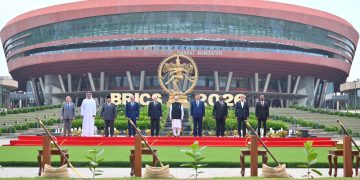
Perhaps nowhere is China’s influence more visible than in its engagement with the Global South. Its support for the expansion of BRICS, advocacy for increased African representation within international institutions, and efforts to amplify the voices of developing nations all reflect a broader strategic objective: the creation of a more inclusive international order.
This does not imply the replacement of one hegemon with another. Rather, it suggests a gradual diffusion of influence across a wider spectrum of states. The aspiration is a world in which global governance is shaped not by a narrow concentration of power but by a broader coalition of stakeholders whose interests reflect the diversity of humanity itself.
The Ultimate Test
The enduring significance of China’s principles, proposals, and actions lies not in the rhetoric surrounding them but in the questions they compel the international community to confront. Can institutions designed for the twentieth century effectively govern the twenty first? Can economic development be elevated from a peripheral concern to a central pillar of global governance? Can sovereignty, cooperation, and mutual respect coexist within an increasingly interconnected world? Can developing nations secure a greater voice in shaping the rules that govern global commerce, finance, and diplomacy?
These questions transcend China itself. They speak to the future of international legitimacy, economic justice, and political stability. Whether China’s vision ultimately succeeds remains uncertain. History teaches us that every rising power combines idealism with strategic interest. China is unlikely to prove an exception. Yet the broader debate it has invigorated is both necessary and timely.
A more just and equitable global order will not emerge through declarations alone. It will require institutions capable of adapting to new realities, economies committed to shared prosperity, and diplomacy rooted in genuine inclusiveness. In that respect, the conversation is no longer about China’s future role in the world. It is about the kind of world the international community wishes to build.
Professor Udenta O. Udenta is a Nigerian scholar, literary theorist, and public intellectual known for his contributions to critical theory, political economy, and African cultural studies. He has been an influential voice in progressive intellectual discourse in Nigeria, consistently engaging questions of governance, ideology, and development within the African context.